
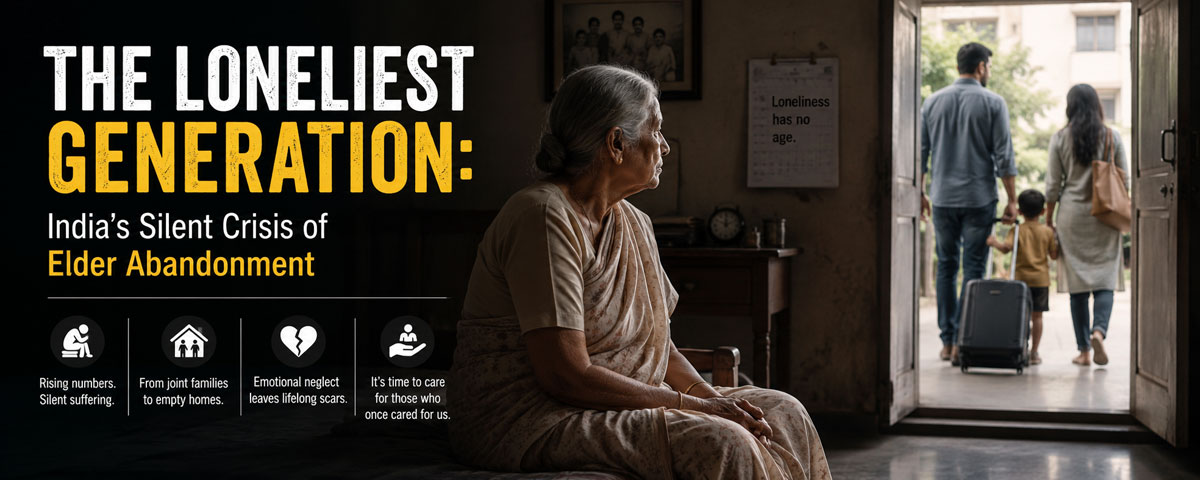
The Loneliest Generation: India's Silent Crisis of Elder Abandonment India has long been known for…
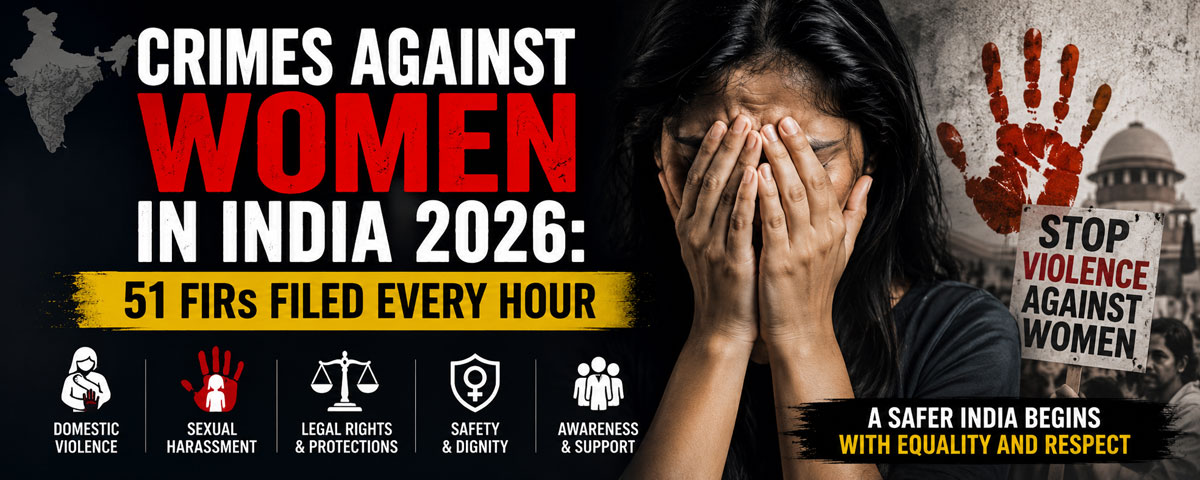
Crimes Against Women in India 2026: 51 FIRs Filed Every Hour
Crimes Against Women in India 2026: 51 FIRs Filed Every Hour
Every hour, nearly 51 First Information Reports (FIRs) related to crimes against women are registered across India. Behind every complaint is a woman whose safety, dignity, or freedom has been violated. Although India has introduced stronger laws and better support systems over the years, violence against women remains a serious concern. Therefore, creating a safer environment requires more than legal reforms. It also requires education, awareness, financial independence, and active participation from society.
According to the latest National Crime Records Bureau (NCRB), 4,45,256 cases of crimes against women were registered in a single recent year. This represents a 4% increase compared to the previous year. As a result, the national average now stands at approximately 51 FIRs every hour, with a crime rate of 66.4 cases per one lakh female population.
However, these figures represent only the cases that are officially reported. Many incidents never reach the police because survivors often fear social stigma, family pressure, financial dependence, or lengthy legal proceedings. Consequently, the actual number of women experiencing violence is likely to be much higher.
At Shaksham Foundation, we believe lasting change begins with opportunity. Through education, skill development, and community support, we work towards building stronger and safer communities. Our Education Support Programme helps children continue their education, creating a foundation where future generations can grow with confidence, equality, and respect.
Understanding the Current State of Crimes Against Women in India
The latest crime statistics show that violence against women continues to affect every part of the country. Although awareness has improved, the number of registered cases remains alarmingly high. Therefore, understanding these figures is essential for identifying where greater attention and stronger action are needed.
According to NCRB data:
- Total registered cases: 4,45,256
- Average complaints: Around 51 FIRs every hour
- National crime rate: 66.4 cases per one lakh women
- Highest crime rates: Delhi (144.4), Haryana (118.7), and Telangana (117.6) per one lakh female population.
Furthermore, the data reveals significant regional differences. While some states have improved reporting systems, others continue to struggle with high levels of violence. As a result, women in several regions remain at greater risk than the national average suggests.
Five states together account for more than half of all reported crimes against women in India:
- Uttar Pradesh
- Maharashtra
- Rajasthan
- West Bengal
- Madhya Pradesh
Consequently, these states require stronger law enforcement, improved victim support services, and long-term prevention strategies. At the same time, public awareness campaigns and community participation can play a vital role in reducing violence against women.
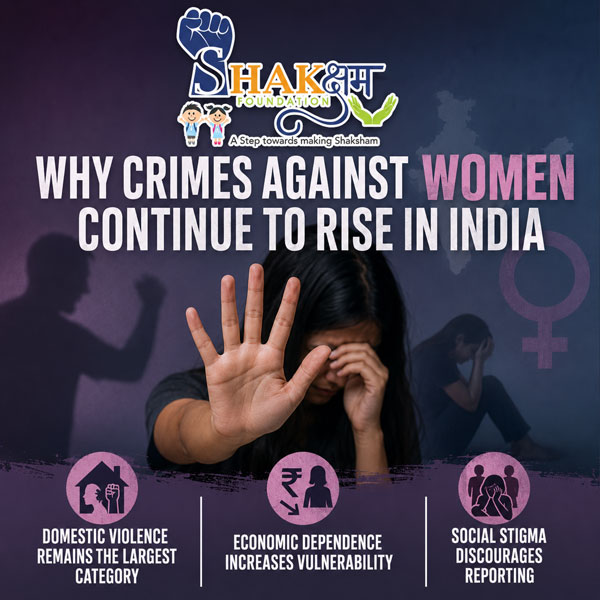
Why Crimes Against Women Continue to Rise in India
The increase in reported crimes against women is influenced by several interconnected factors. While better reporting has contributed to higher numbers, social, economic, and institutional challenges continue to place many women at risk. Therefore, addressing the root causes is just as important as strengthening legal action.
Domestic Violence Remains the Largest Category
Many people assume that women are most at risk from strangers. However, official statistics tell a different story. According to NCRB data, cruelty by a husband or his relatives accounts for more than 1,33,000 reported cases, representing nearly 31% of all crimes against women.
As a result, the most common threat to a woman’s safety often comes from within her own home. Financial dependence, emotional pressure, and fear of social judgment frequently prevent survivors from seeking immediate help.
Economic Dependence Increases Vulnerability
Financial independence allows women to make informed decisions about their future. However, many women remain financially dependent on family members, making it difficult to leave abusive situations. Therefore, improving access to education and livelihood opportunities is essential for long-term safety.
At Shaksham Foundation, we believe education creates opportunity. Our initiatives focus on helping children continue learning because educated communities are better equipped to promote equality and reduce violence. You can also explore our article on Women Empowerment 2026: Education and Equality to understand how financial independence strengthens women’s confidence and security.
Social Stigma Discourages Reporting
Many survivors choose not to report violence because they fear public judgment, family conflict, or lengthy legal procedures. In addition, some women worry about losing financial support or disrupting their children’s lives. Consequently, thousands of incidents remain undocumented every year.
Breaking this silence requires supportive communities, accessible legal assistance, and greater awareness of women’s rights. Moreover, encouraging respectful conversations about gender equality can help create an environment where survivors feel safer seeking justice.
The Gap Between Reported Cases and Reality
Official crime records help us understand the scale of crimes against women in India. However, they do not capture every incident. Many women never file a complaint because they fear social stigma, financial hardship, retaliation, or lengthy legal proceedings. As a result, the true extent of violence is likely much higher than official figures suggest.
According to the National Family Health Survey-5 (NFHS-5), nearly 32% of ever-married women aged 18–49 have experienced physical, emotional, or sexual violence by their husbands at some point in their lives. Furthermore, 6.1% reported experiencing sexual violence.
These findings show that many women continue to suffer in silence. Therefore, improving access to support services and encouraging survivors to report abuse remain essential steps towards reducing violence.
Why Many Cases Go Unreported
Several factors discourage women from seeking legal help. In many situations, survivors feel isolated or worry about the consequences of reporting abuse.
Common reasons include:
- Fear of social stigma and victim blaming.
- Financial dependence on family members.
- Concern for children’s well-being.
- Limited awareness of legal rights.
- Lengthy legal procedures.
- Pressure to keep family matters private.
Consequently, many incidents remain outside the official records, making community awareness and survivor support more important than ever.

Online Harassment Has Become a Growing Threat
Violence against women is no longer limited to physical spaces. Today, online abuse has become an increasing concern as more people rely on digital platforms for communication, work, and education.
A recent Asia-Pacific survey found that 76% of women parliamentarians experienced psychological violence online. In addition, 60% received direct threats through social media platforms. These findings demonstrate that even women in leadership positions are not immune to digital abuse.
Online harassment commonly includes:
- Cyberstalking
- Abusive messages
- Identity theft
- Image-based abuse
- Online threats
- Defamation and hate speech
Therefore, improving cyber safety, digital awareness, and stronger enforcement of cybercrime laws has become increasingly important for protecting women in the digital age.
Why Faster Justice Is Essential
India has strengthened several laws aimed at protecting women. Following the 2012 Nirbhaya case, the country introduced stricter criminal laws, expanded the Women’s Helpline (181), established One Stop Centres, and created fast-track courts for crimes against women.
However, implementation continues to be a major challenge.
In many states, survivors still face delays during investigations and court proceedings. Consequently, justice often takes years, discouraging many women from pursuing legal action. Faster investigations, efficient courts, and stronger victim protection can significantly improve confidence in the justice system.
Moreover, timely justice not only supports survivors but also discourages repeat offences and strengthens public trust in law enforcement.

Why Women’s Education and Financial Independence Matter
Long-term solutions require more than stronger laws. Education and financial independence play an equally important role in reducing violence against women. When women have access to education, employment, and stable incomes, they are better equipped to make independent decisions and seek support when necessary.
Furthermore, education increases awareness of legal rights and available government services. It also helps women develop confidence, leadership skills, and greater economic security.
At Shaksham Foundation, we believe education creates lasting change. Through our Education Support Programme, we help children continue their education and build brighter futures.
If you’re interested in understanding how education contributes to gender equality, you can also read our guide on Women Empowerment 2026: Education and Equality. Likewise, our article on The Education Crisis in India explains why improving access to quality education benefits individuals, families, and communities alike.
Key Facts About Crimes Against Women in India
Understanding the latest statistics helps highlight why women’s safety remains a national priority. Although these figures represent reported cases, they also show where greater awareness, stronger implementation of laws, and community support are needed.
| Indicator | Latest Insight |
|---|---|
| Total reported cases | 4,45,256 crimes against women were registered in a single recent year. |
| Average FIRs filed | Approximately 51 FIRs are registered every hour across India. |
| National crime rate | 66.4 cases per one lakh female population. |
| Largest category of crime | Cruelty by husband or relatives accounts for nearly 31% of all reported cases. |
| Highest crime rate | Delhi recorded 144.4 cases per one lakh women, followed by Haryana and Telangana. |
| States with the most reported cases | Uttar Pradesh, Maharashtra, Rajasthan, West Bengal, and Madhya Pradesh. |
| Domestic violence prevalence | NFHS-5 found that 32% of ever-married women have experienced physical, emotional, or sexual violence. |
How Shaksham Foundation Helps Build Safer Communities
Preventing crimes against women requires long-term social change. Therefore, creating equal opportunities through education and skill development is just as important as strengthening legal protections.
At Shaksham Foundation, we believe every child deserves access to education and every woman deserves the opportunity to become financially independent. Consequently, our programmes focus on empowering individuals to build brighter and more secure futures.
Education Opens the Door to Opportunity
Education equips girls and young women with knowledge, confidence, and decision-making skills. Moreover, it improves employment opportunities and increases awareness of legal rights.
Through our Education Support Programme, we help children continue their education by providing learning resources and encouraging school participation. As a result, more young people can work towards a future built on knowledge rather than limitations.
Skill Development Encourages Financial Independence
Financial independence enables women to make decisions with greater confidence. It also reduces dependence on others during difficult situations.
Therefore, skill development and vocational training play an important role in creating sustainable livelihoods. Women who earn their own income often have greater freedom to make choices that improve their well-being and future.
Community Awareness Creates Lasting Change
Creating safer communities requires collective effort. Families, schools, workplaces, and local organisations all have a role to play in promoting respect, equality, and safety.
Furthermore, awareness programmes help people recognise early signs of abuse and encourage survivors to seek timely support. They also challenge harmful stereotypes that contribute to discrimination and violence.
If you would like to understand how education transforms lives, read our article on The Education Crisis in India. Likewise, our guide on Hunger in India 2026: Malnutrition, Poverty and Inequality explains how poverty and inequality often affect vulnerable communities, including women and children.

How You Can Help Improve Women’s Safety
Every individual can contribute to building a safer society. Although lasting change takes time, small actions can make a meaningful difference when communities work together.
You can help by:
- Supporting girls’ education and equal opportunities.
- Speaking out against domestic violence and harassment.
- Encouraging survivors to seek professional support.
- Learning about women’s legal rights and government schemes.
- Volunteering with organisations that promote education and empowerment.
- Donating to programmes that help women and children access education and skill development.
Ultimately, a safer India depends on respect, awareness, and equal opportunities. Therefore, every effort made today contributes to stronger communities tomorrow.
Frequently Asked Questions
1. How many crimes against women are reported in India every year?
According to the latest National Crime Records Bureau (NCRB) data, 4,45,256 cases of crimes against women were registered in a single recent year. This averages approximately 51 FIRs every hour across the country. However, experts believe the actual number of incidents is much higher because many cases remain unreported.
2. What is the most common crime against women in India?
The largest category of reported offences is cruelty by a husband or his relatives. It accounts for more than 1,33,000 cases, representing nearly 31% of all crimes against women. Therefore, domestic violence remains one of India’s most pressing social challenges.
3. Which states report the highest number of crimes against women?
Uttar Pradesh, Maharashtra, Rajasthan, West Bengal, and Madhya Pradesh together account for more than half of all reported crimes against women. Furthermore, Delhi, Haryana, and Telangana record the highest crime rates when measured per one lakh female population.
4. Why do many crimes against women go unreported?
Many survivors choose not to report violence because they fear social stigma, financial dependence, retaliation, or lengthy legal procedures. In addition, family pressure and limited awareness of legal rights often discourage women from approaching the authorities.
5. Does India have laws to protect women from violence?
Yes. India has introduced several laws and support systems to protect women, including stricter criminal laws, the Women’s Helpline (181), One Stop Centres, and fast-track courts. However, timely implementation and quicker access to justice remain important challenges.
6. How does education help improve women’s safety?
Education increases awareness, builds confidence, and creates employment opportunities. As a result, women who are financially independent are often better positioned to make informed decisions and leave unsafe environments when necessary.
7. How is online harassment affecting women?
Online abuse has become increasingly common with the growth of social media and digital platforms. Women may experience cyberstalking, online threats, identity theft, abusive messages, and image-based harassment. Therefore, digital safety has become an essential part of women’s overall security.
8. How does Shaksham Foundation support women and communities?
Shaksham Foundation works towards building stronger communities through education, skill development, and social welfare initiatives. Our Education Support Programme helps children continue their education, creating opportunities that contribute to long-term social progress and women’s empowerment.
9. How can I help promote women’s safety?
You can support women’s safety by encouraging education, speaking against violence, promoting gender equality, supporting survivors, volunteering with trusted organisations, and spreading awareness about legal rights and available support services.
10. Where can women seek help in India?
Women facing violence can contact the Women’s Helpline (181), approach their nearest police station, visit a One Stop Centre, or seek assistance from the National Commission for Women (NCW). These services provide guidance, protection, and support for women in need.
Conclusion
Crimes Against Women in India 2026: 51 FIRs Filed Every Hour highlights the urgent need to address one of the country’s most significant social challenges. Although stronger laws and improved reporting mechanisms have strengthened the response to gender-based violence, the number of reported cases continues to remain a serious concern. Therefore, sustained efforts are required from governments, communities, educational institutions, and individuals alike.
However, lasting change cannot rely on legal action alone. Education, financial independence, awareness, and equal opportunities are equally important in reducing violence and empowering women to live with confidence and dignity. Furthermore, encouraging survivors to report abuse and strengthening support systems can help create safer communities across India.
At Shaksham Foundation, we remain committed to creating positive social change through education and community development. Our Education Support Programme continues to help children access quality education because every educated child contributes to a stronger, safer, and more equitable society.
If this article has inspired you, consider supporting our mission by donating, volunteering, or spreading awareness. Every contribution helps create opportunities that empower individuals, strengthen communities, and build a future where every woman can live safely and with dignity.
Sources and References

Related Posts
Comments (0)