
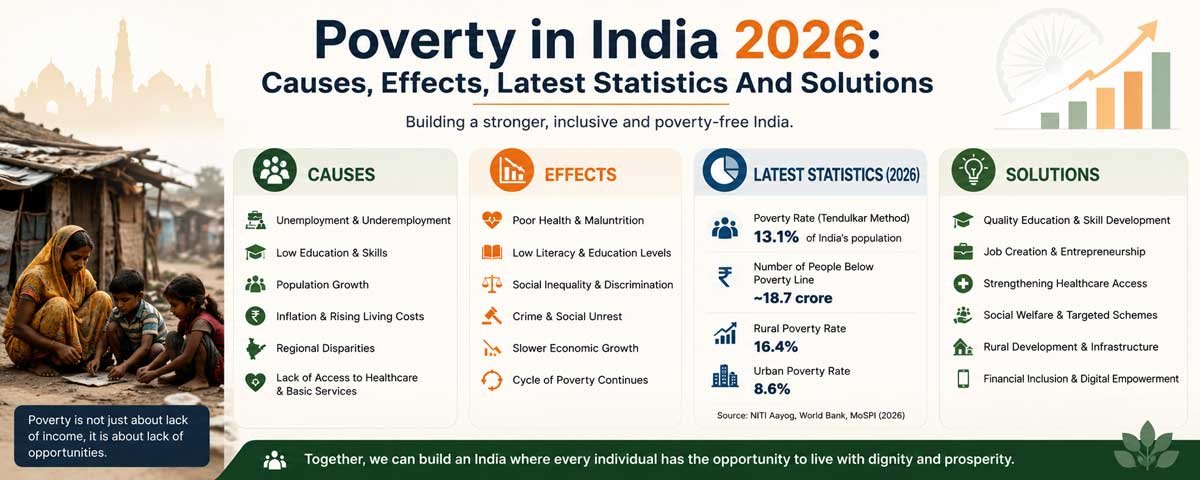
Poverty in India 2026 remains one of the country's most pressing social and economic challenges…
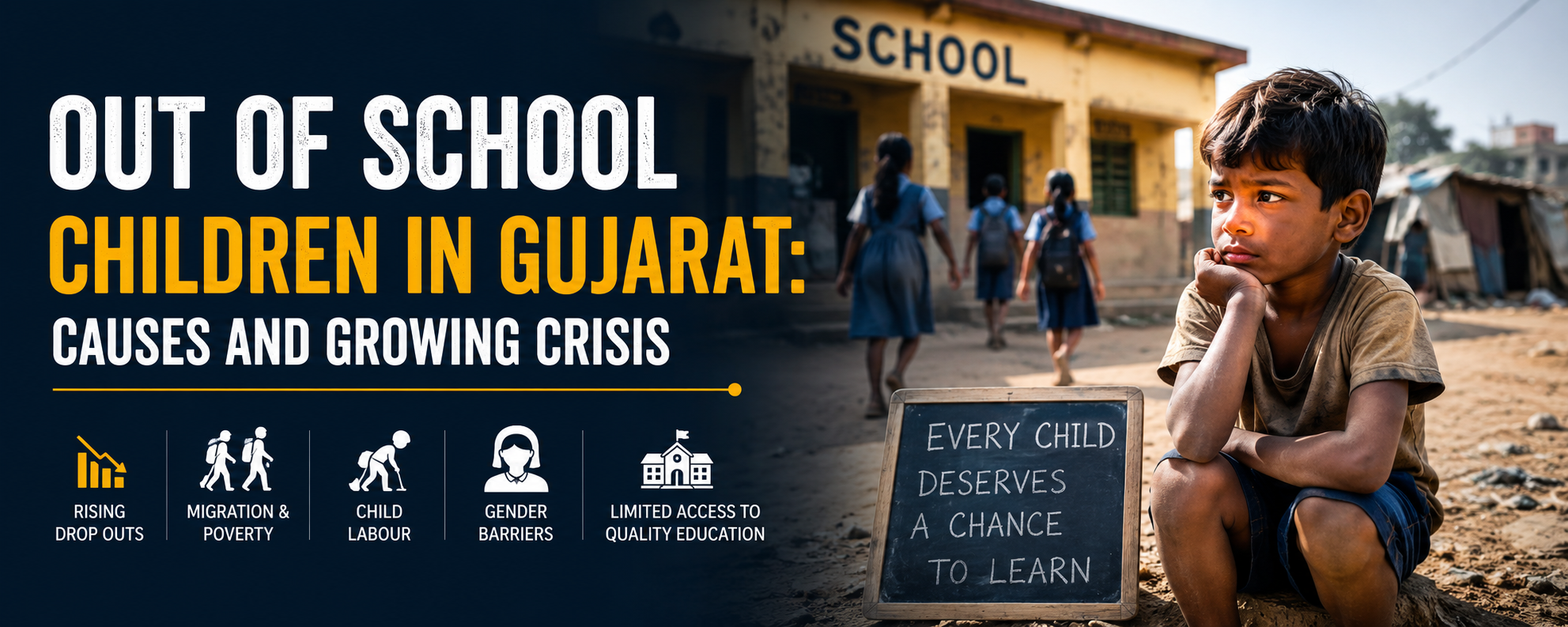
Out of School Children in Gujarat: Causes And Growing Crisis
Education is one of the most powerful tools for breaking the cycle of poverty, yet millions of children across India are still missing out on their right to learn. While the country has made significant progress in improving school enrolment over the past decade, the latest figures reveal a worrying reality. Millions of children remain outside the education system, and Gujarat has emerged as one of the states facing the biggest challenge.
From the busy streets of Ahmedabad to migrant settlements and construction sites, it is not uncommon to see children working or spending their days away from a classroom. Behind every child who is out of school is a story of poverty, migration, child labour, or limited access to quality education. These are not isolated cases they reflect a growing crisis that demands immediate attention.
At Shaksham Foundation, we work closely with children from underserved communities across Ahmedabad and witness these challenges every day. Through our Education Support Program, we help children from vulnerable families access free education, learning resources, and a safe environment where they can continue their studies. Understanding why so many children are leaving school is the first step towards ensuring that every child gets the opportunity to build a better future.
The Number That Should Alarm Every Indian
46 million. That is the estimated number of children between the ages of 6 and 17 who are currently out of school in India, according to the UDISE+ 2024–25 report released by the Ministry of Education. Put simply, nearly one in every six school-age children is not attending school.
This figure is more than just a statistic. It represents millions of children whose education has been interrupted or never began at all. Many are forced to leave school because of poverty, migration, child labour, family responsibilities, or a lack of access to quality education. Without timely support, these children face an increased risk of remaining trapped in a cycle of low-paying work and limited opportunities.
India recognised education as a fundamental right through the Right to Education (RTE) Act, 2009, and the National Education Policy (NEP) 2020 aims to achieve universal school education. However, the latest data shows that reaching every child is still a major challenge, especially for families living in underserved and migrant communities.
Bridging this gap requires more than government policies alone. Community 0driven initiatives also play a vital role in helping children return to school. Through its Education Support Program, Shaksham Foundation works with children from vulnerable communities by providing free learning opportunities, educational materials, and consistent guidance to help them continue their education.
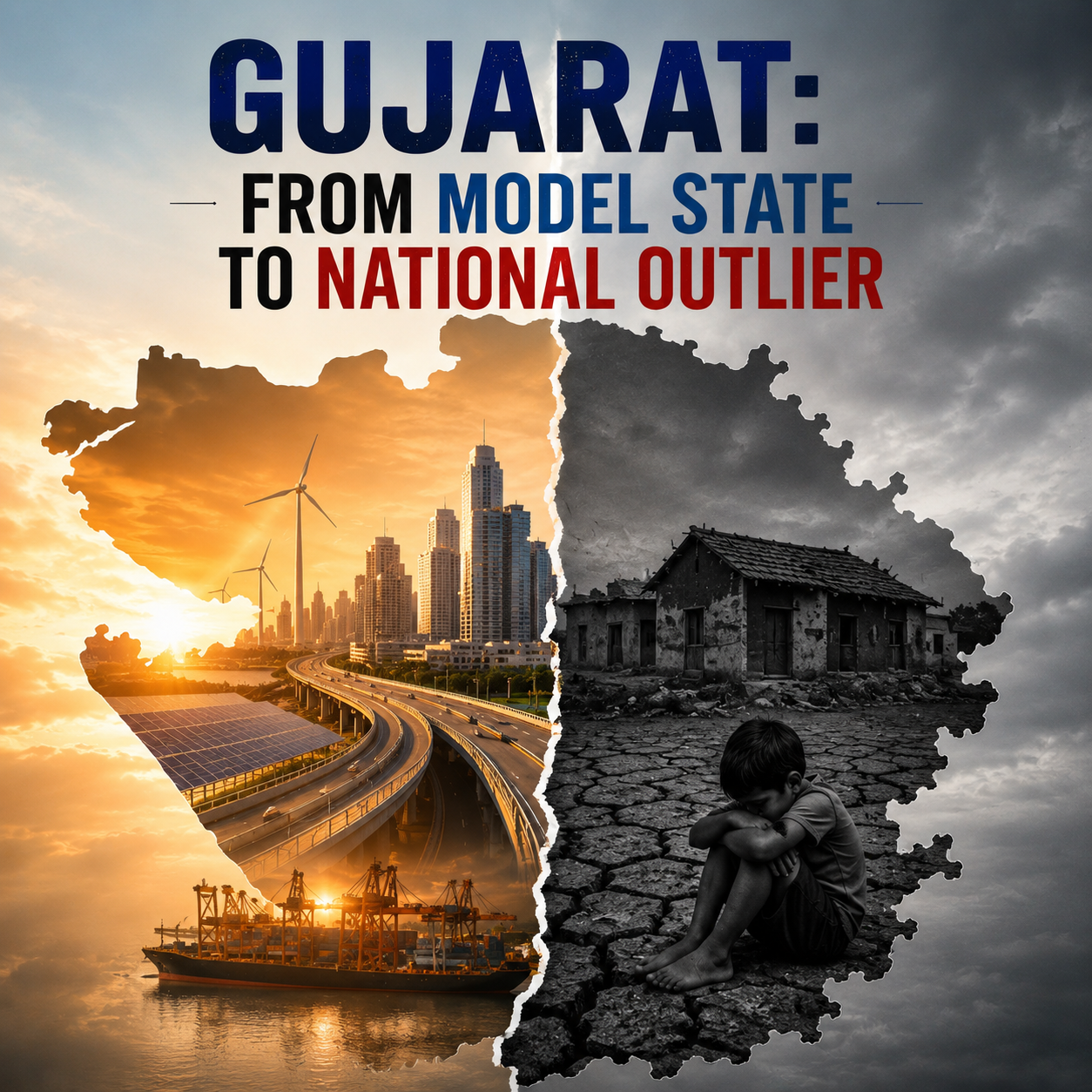
Gujarat: From Model State to National Outlier
For years, Gujarat has been recognised as one of India’s fastest-growing states, known for its strong industries, modern infrastructure, and economic development. However, recent data paints a very different picture when it comes to children’s education. Behind the state’s economic success lies a growing education crisis that cannot be ignored.
According to data presented in Parliament by the Ministry of Women and Child Development, Gujarat recorded 2.4 lakh (240,000) out-of-school children during the 2025–26 academic year, the highest number reported by any state in India. Out of these, nearly 1.1 lakh were adolescent girls, highlighting the additional challenges many girls face in continuing their education.
The rise has been both sudden and alarming. In 2024, Gujarat reported 54,541 out of school children. Within just one year, that number increased by more than 340%, surpassing states such as Uttar Pradesh and Assam, which have traditionally reported higher school dropout rates.
These figures raise an important question: why are so many children in one of India’s most industrialised states still unable to access education? The answer lies in a combination of poverty, migration, child labour, limited educational support, and social challenges that continue to keep thousands of children away from classrooms.
At Shaksham Foundation, we meet many of these children every day through our Education Support Program. By reaching underserved communities across Ahmedabad, we work to remove barriers that prevent children from learning and help them take their first steps back into education.
Why Are Gujarat’s Children Disappearing from School?
There is no single reason why children drop out of school in Gujarat. In most cases, it is the result of several challenges that build up over time. Financial hardship, migration, child labour, family responsibilities, and limited access to quality education often force parents to prioritise survival over schooling. As these problems continue, thousands of children gradually slip out of the education system.
1. Seasonal Migration Disrupts Children’s Education
Gujarat’s industries rely heavily on migrant workers employed in construction, brick kilns, agriculture, textile factories, and other labour intensive sectors. As families move from one district or state to another in search of work, their children move with them. Unfortunately, many are unable to continue their education because enrolling in a new school is often difficult or delayed.
Studies on migrant families in Saurashtra found that nearly 63% of school-age children were not attending school after relocating for work. In some districts, including Amreli, dropout rates among migrant children reached as high as 87%. Since many of these children remain officially enrolled in their hometown schools, they often disappear from local records without receiving any education where they currently live.
2. Poverty and Child Labour Keep Children Out of Classrooms
For many low-income families, every earning member makes a difference. When household expenses continue to rise, children are often expected to contribute financially instead of attending school. Across cities like Ahmedabad and Surat, children can still be seen working at construction sites, roadside food stalls, workshops, and small businesses.
Most parents do not want their children to leave school. However, when the choice is between earning enough money to buy food or sending a child to class, survival naturally becomes the family’s first priority.
3. Girls Face Additional Barriers to Education
Girls are among the most affected by the education crisis. Of Gujarat’s 2.4 lakh out-of-school children, nearly half are adolescent girls. Many leave school to care for younger siblings, manage household responsibilities, fetch water, or because of concerns about safety and long travel distances. In some communities, early marriage also continues to interrupt girls’ education.
Providing safe learning environments, nearby schools, and community support can help more girls continue their education and achieve long-term independence.
4. Limited Resources Make Learning More Difficult
Many government schools continue to face teacher shortages and limited resources. Migrant children often struggle even after enrolment because they encounter language barriers and a lack of learning support. In some cases, schools do not have teachers who can communicate in the child’s native language, making it difficult for them to adapt and stay engaged in class.
These challenges increase the likelihood that children will eventually stop attending school altogether.
5. Returning to School Is Often the Hardest Step
Once a child drops out, returning to education becomes increasingly difficult. Many families are unaware of government support schemes, while migrant children frequently move between districts without proper documentation. As a result, thousands of children remain outside the education system for years.
This is why organisations like Shaksham Foundation focus on identifying children who have left school and helping them reconnect with education through the Education Support Program. By working directly within underserved communities, we help remove barriers that prevent children from learning and create opportunities for them to return to the classroom.
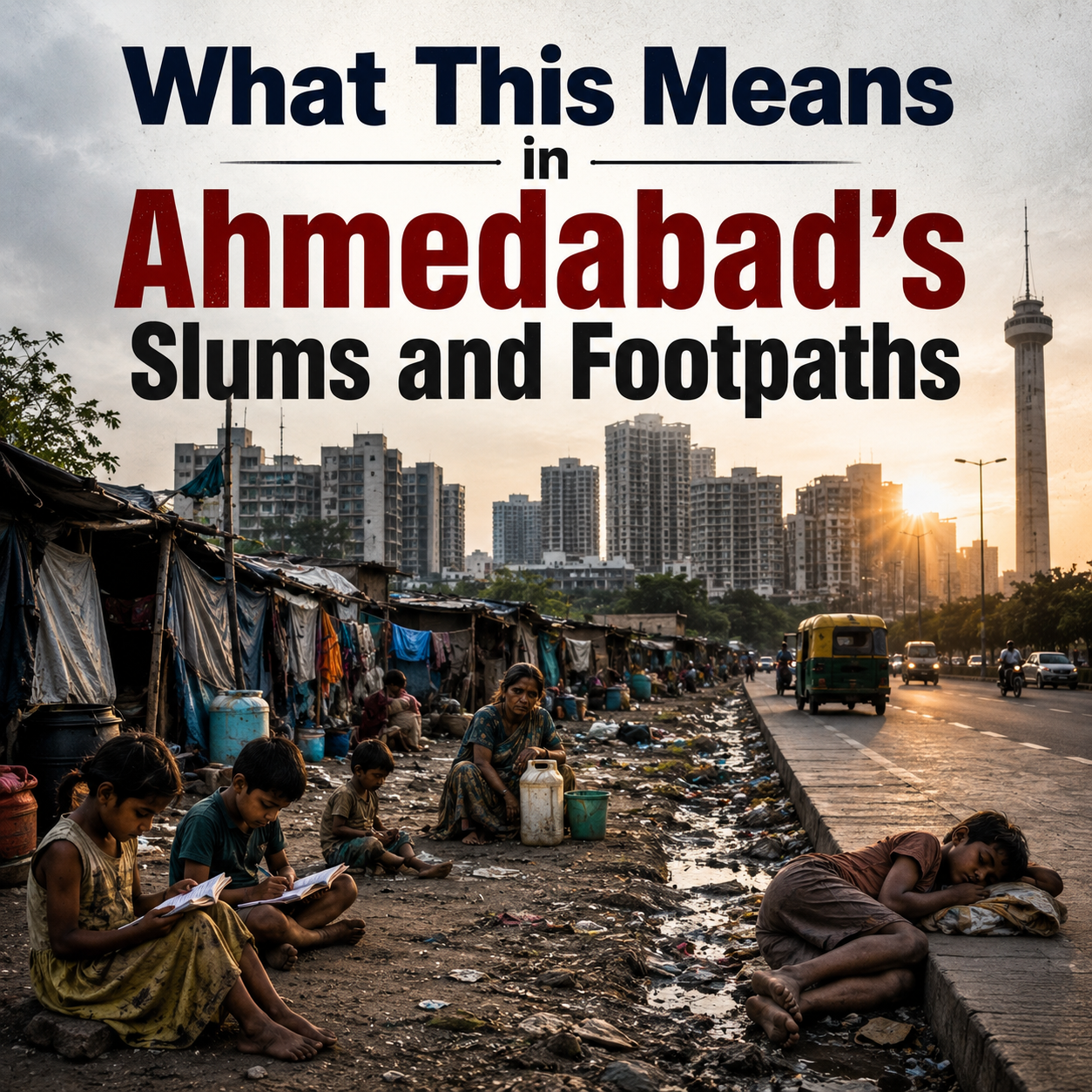
What This Means in Ahmedabad’s Slums and Footpaths
These figures are not just part of a government report they reflect the everyday reality of thousands of children living across Ahmedabad. Behind every statistic is a child whose education has been interrupted by poverty, migration, or circumstances beyond their control.
At Shaksham Foundation, we witness this reality every day while working in communities such as Ram Rahim Nagar (Riverfront), Behrampura, and Thaltej. Many children living in these areas belong to migrant families or households that depend on daily wages earned through construction work, domestic work, street vending, or other informal jobs.
For many of these children, attending school is not a simple decision. Some have never been enrolled because their families move frequently in search of work. Others left school after Class 3 or 4 when migration, financial difficulties, or family responsibilities made it impossible to continue. Every missed school year makes it harder for them to return and keep up with their peers.
To address this challenge, Shaksham Foundation runs free education centres in Behrampura, Ram Rahim Nagar (Riverfront), and Thaltej. Instead of waiting for children to reach a school, we take education to the communities where they need it the most.
Our centres provide free learning support, study materials, books, uniforms, and a safe environment where children can learn with confidence. Beyond academics, we encourage regular attendance, build self-confidence, and help children prepare to enter or rejoin formal schools whenever possible.
Every child deserves the opportunity to learn, regardless of where they live or their family’s financial situation. By working closely with local communities, we aim to ensure that more children return to the classroom and continue their education without interruption.
What Needs to Change
Addressing Gujarat’s growing education crisis requires more than increasing school enrolment numbers. It calls for long term solutions that tackle the challenges preventing children from staying in school. Governments, NGOs, local communities, and individuals all have an important role to play in ensuring that every child receives a quality education.
Improve Tracking for Migrant Children
Many children lose access to education simply because their families move from one place to another for work. A stronger system for tracking migrant children across districts and states would help schools identify these students quickly and ensure they continue their education without unnecessary interruptions.
Strengthen Community-Based Learning Centres
Children living in slums, construction sites, and migrant settlements often need learning support close to where they live. Community education centres and bridge learning programmes can help children who have dropped out rebuild their confidence and prepare to re-enter formal schools.
Through its Education Support Program, Shaksham Foundation follows this approach by providing free education and learning support to children from underserved communities across Ahmedabad.
Provide Greater Support for Girls’ Education
Many girls leave school because of household responsibilities, safety concerns, or early marriage. Improving access to nearby schools, providing safe transportation, and creating awareness within communities can help more girls continue their education and achieve greater independence.
Reduce Child Labour Through Family Support
Ending child labour requires more than strict enforcement of laws. Families also need access to stable incomes, social welfare programmes, and employment opportunities so they do not have to depend on their children’s earnings to meet basic needs.
Encourage Community Participation
Creating lasting change is only possible when communities become active partners in education. Parents, teachers, volunteers, local businesses, and non-profit organisations can work together to identify children who are out of school and help them return to learning.
Every child who returns to the classroom moves one step closer to a brighter future. With continued support and collective action, Gujarat can ensure that more children receive the education they deserve instead of being left behind.
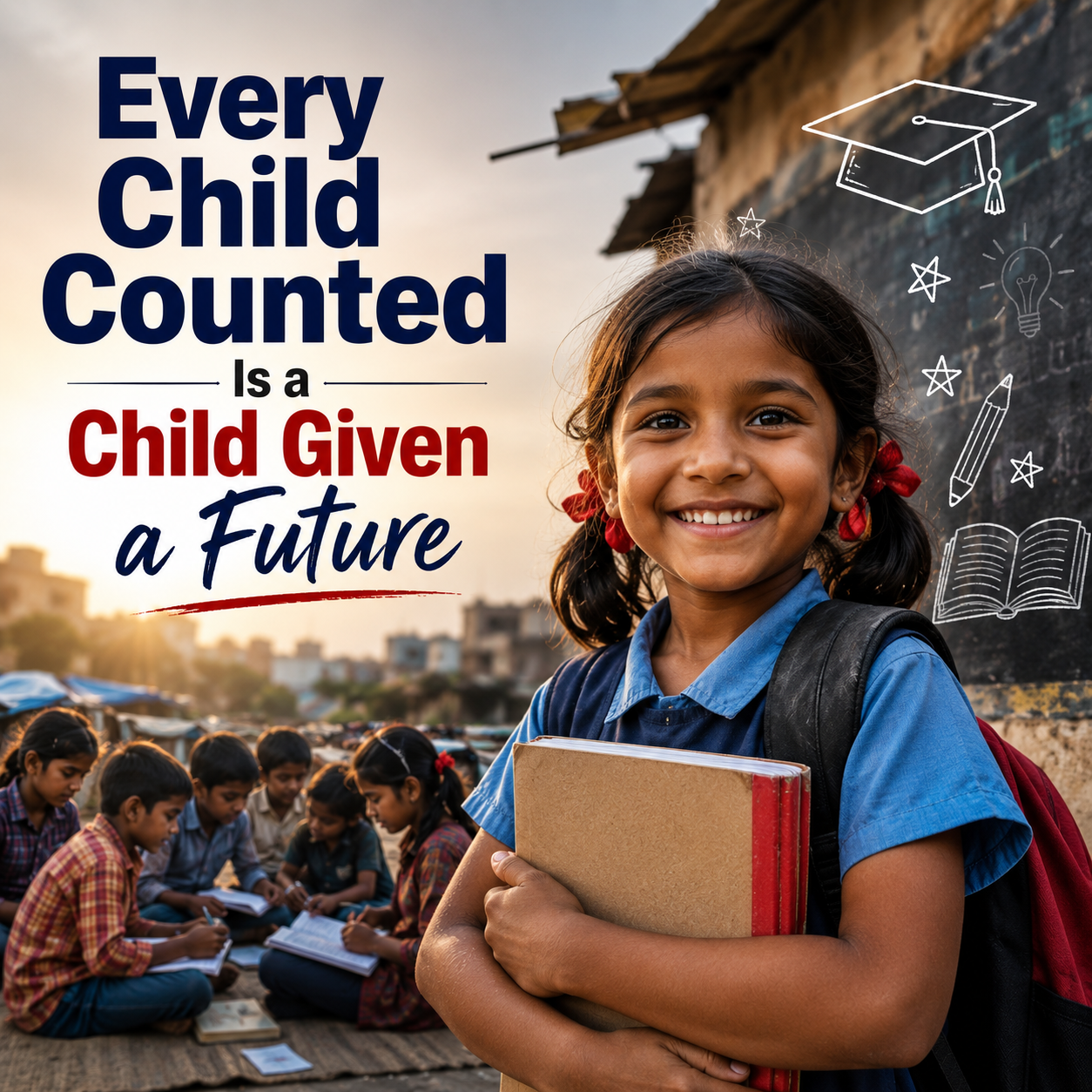
Every Child Counted Is a Child Given a Future
Behind every one of Gujarat’s 2.4 lakh out of school children is a unique story. Some dream of becoming teachers, doctors, engineers, or artists. Others simply want the opportunity to sit in a classroom, make friends, and build a better future. Yet for many, poverty, migration, and limited access to education continue to stand in the way.
While the scale of the crisis may seem overwhelming, meaningful change begins one child at a time. Enrolling a child in school, providing learning materials, or creating a safe place to study can transform not only their future but also the future of their family and community.
At Shaksham Foundation, we are committed to making education accessible for children living in underserved communities across Ahmedabad. Through our Education Support Program, we provide free education, learning resources, and ongoing support to help children return to school and continue learning with confidence.
However, creating lasting change is not something any organisation can achieve alone. It requires the support of individuals, volunteers, donors, and communities who believe that every child deserves the chance to learn and succeed.
If you would like to make a difference, you can support our mission by contributing to the Education Support Program. Your contribution can help provide books, uniforms, learning materials, and access to quality education for children who need it the most.
Together, we can ensure that more children return to the classroom, continue their education, and build a brighter future—one child at a time.
Frequently Asked Questions (FAQs)
1. How many children are currently out of school in India?
According to the UDISE+ 2024–25 report, around 46 million children between the ages of 6 and 17 are currently out of school in India. This means nearly one in every six school-age children is missing out on education.
2. Why does Gujarat have the highest number of out-of-school children?
Several factors contribute to this issue, including seasonal migration, poverty, child labour, limited access to quality education, teacher shortages, and financial challenges faced by low-income families. These issues often force children to leave school before completing their education.
3. How does migration affect children’s education in Gujarat?
Many migrant families move frequently in search of work, making it difficult for children to stay enrolled in one school. As a result, many children experience interrupted learning or drop out of school altogether.
4. Why are girls more likely to drop out of school?
Girls often leave school because of household responsibilities, caring for younger siblings, safety concerns, financial difficulties, or early marriage. Providing safe learning environments and community support can help more girls continue their education.
5. How is Shaksham Foundation helping out-of-school children?
Shaksham Foundation runs free education centres in Behrampura, Ram Rahim Nagar (Riverfront), and Thaltej in Ahmedabad. Through its Education Support Program, the organisation provides free learning support, books, uniforms, and educational resources to help children return to school and continue their studies.
6. How can I support the education of underprivileged children in Ahmedabad?
You can support children from underserved communities by volunteering, spreading awareness, or making a contribution to the Shaksham Foundation Education Support Program. Every contribution helps provide educational resources and learning opportunities for children who need them the most.
Together, We Can Give Every Child a Chance to Learn
Every child deserves the opportunity to learn, grow, and build a brighter future. Unfortunately, thousands of children across Gujarat are still out of school because of poverty, migration, and limited access to education. With the right support, their stories can change.
At Shaksham Foundation, we work every day to help children from underserved communities return to the classroom through our Education Support Program. From providing books and uniforms to creating safe learning spaces, every effort brings a child one step closer to a better future.
If this story inspired you, you can make a real difference today. Your support helps us reach more children, expand our education centres, and ensure that no child is left behind.
👉 Donate Now and Help a Child Return to School
Together, we can transform lives—one child, one classroom, and one future at a time.
Want to learn more about our work? Visit our homepage or explore our Education Support Program to see how we’re creating lasting change in the lives of children across Ahmedabad.

Related Posts
Comments (0)