
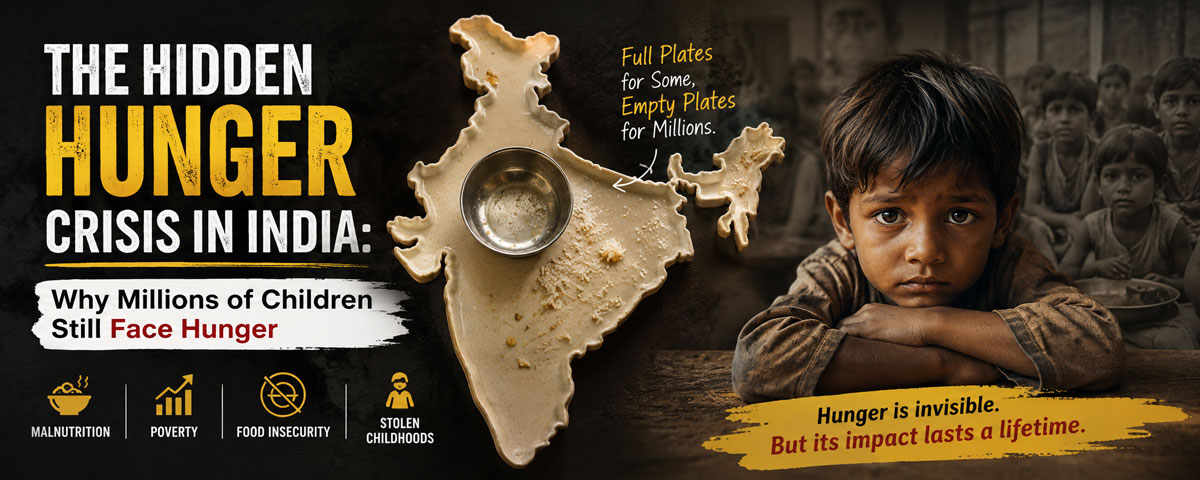
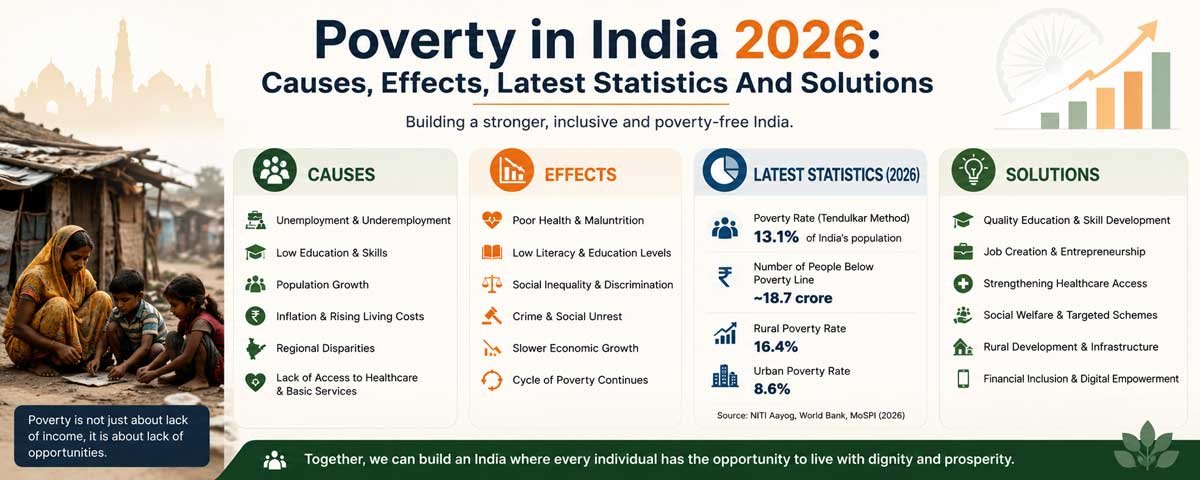
Poverty in India 2026 remains one of the country's most pressing social and economic challenges…
The Hidden Hunger Crisis in India: Why Millions of Children Still Face Hunger
India is known as one of the world’s largest food producers. Even so, millions of children still do not receive the nutrition their growing bodies need. This contradiction lies at the heart of the hidden hunger crisis in India. Food may be available across the country, but access to a healthy and balanced diet remains out of reach for many families.
Poverty, rising food prices, poor maternal health, and unequal access to healthcare all contribute to this crisis. As a result, countless children face poor growth, weakened immunity, and learning difficulties long before reaching school age. Although the problem receives less attention than food shortages, its long-term impact is equally devastating.
The Numbers Behind the Hidden Hunger Crisis in India
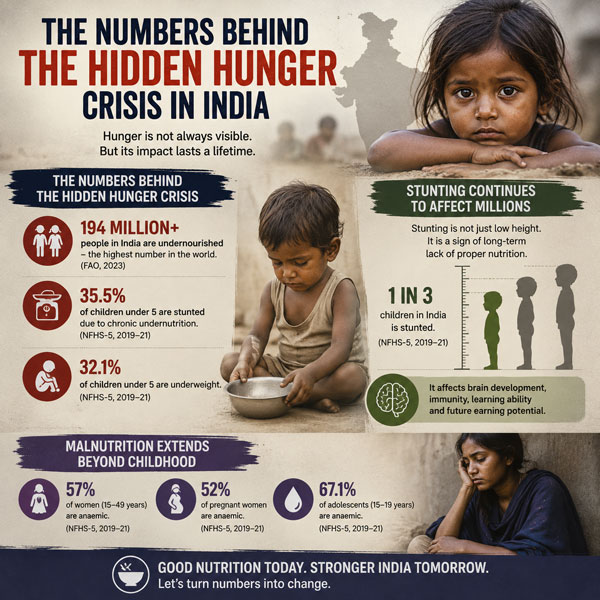
According to the 2025 State of Food Security and Nutrition in the World report, published by the United Nations, 18.7% of Indian children under five suffered from wasting in 2024, giving India the highest child wasting rate in the world. In 2024, 18.7% of Indian children under five suffered from wasting, giving India the highest child wasting rate in the world. More than 21 million children are affected by this severe form of malnutrition.
Stunting Continues to Affect Millions
Wasting reflects short-term nutritional deprivation, while stunting develops over several years because of long-term undernutrition. Around 37 million Indian children under five are stunted. Besides limiting physical growth, stunting can reduce cognitive development, weaken the immune system, and increase health risks throughout life.
Malnutrition Extends Beyond Childhood
The Composite Index of Anthropometric Failure (CIAF) reached 41% in 2025. Although this figure has improved from 52.6% in 2021, it still means that nearly four out of every ten young children experience some form of growth failure.
Maternal health also plays a major role. More than 203 million Indian women aged 15 to 49 are anaemic. Poor maternal nutrition increases the likelihood of low birth weight and childhood malnutrition, allowing the cycle to continue from one generation to the next.
Why Does the Hidden Hunger Crisis in India Continue?
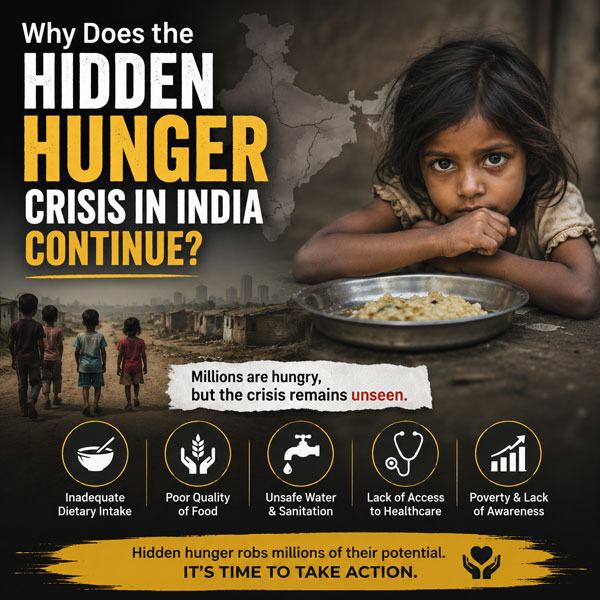
India produces enough food to feed its population, yet millions of families still struggle to eat a nutritious diet every day. The problem is not food production alone. Limited income, rising living costs, poor healthcare, and unequal access to nutritious food continue to leave children at risk of malnutrition across many parts of the country.
According to recent estimates, nearly 45% of deaths among children under five are linked to undernutrition. In many cases, a lack of proper nutrition weakens the immune system, making common illnesses much harder to survive.
Healthy Food Remains Unaffordable for Many Families
A balanced diet should include fruits, vegetables, milk, eggs, pulses, and other protein-rich foods. However, these essentials remain too expensive for many low-income households. Recent data shows that 42.9% of Indians cannot afford a healthy diet, while around 12% of the population remains undernourished.
Poor maternal nutrition, unsafe sanitation, and limited healthcare further increase the risk of child malnutrition. When children miss out on proper nutrition during their early years, the effects often continue throughout life.
Some States Face a Greater Burden
Child malnutrition is not evenly distributed across India. States including Jharkhand (54.5%), Bihar (53.0%), Uttar Pradesh (52.0%), Madhya Pradesh (51.0%), and Gujarat (50.5%) continue to report some of the highest rates. Better maternal education, improved healthcare, and stronger public health systems have helped states such as Kerala achieve significantly lower figures.
In Gujarat, poor nutrition is often linked with wider social challenges, including interrupted education and financial hardship. Children who leave school early may also lose access to regular meals and basic health support. Learn more about this issue in Out of School Children in Gujarat: Causes and Growing Crisis.
India Faces a Double Burden of Malnutrition
Undernutrition is no longer the country’s only nutrition challenge. According to UNICEF’s Child Nutrition Report, 9.4% of children aged 5 to 19 are overweight or obese. found that 9.4% of children aged 5 to 19 are overweight or obese. This means India is facing a double burden of malnutrition. While millions of children still do not receive enough essential nutrients, many others consume high-calorie diets that lack the vitamins and minerals needed for healthy growth.
Frequently Asked Questions
Support Better Nutrition for Every Child
Childhood hunger is more than a health issue. It affects education, future employment, and overall quality of life. Timely support can help children receive nutritious food, medical care, and educational opportunities during the years when they matter most.
Those who wish to contribute can donate to Shaksham Foundation. Every contribution helps strengthen programmes that provide nutrition, healthcare, education, and other essential support for children and families facing food insecurity.
Government initiatives such as POSHAN Abhiyaan also aim to improve maternal and child nutrition through community-based interventions. However, sustained support from civil society and local organisations remains equally important for reaching vulnerable families.

Related Posts
Comments (0)