
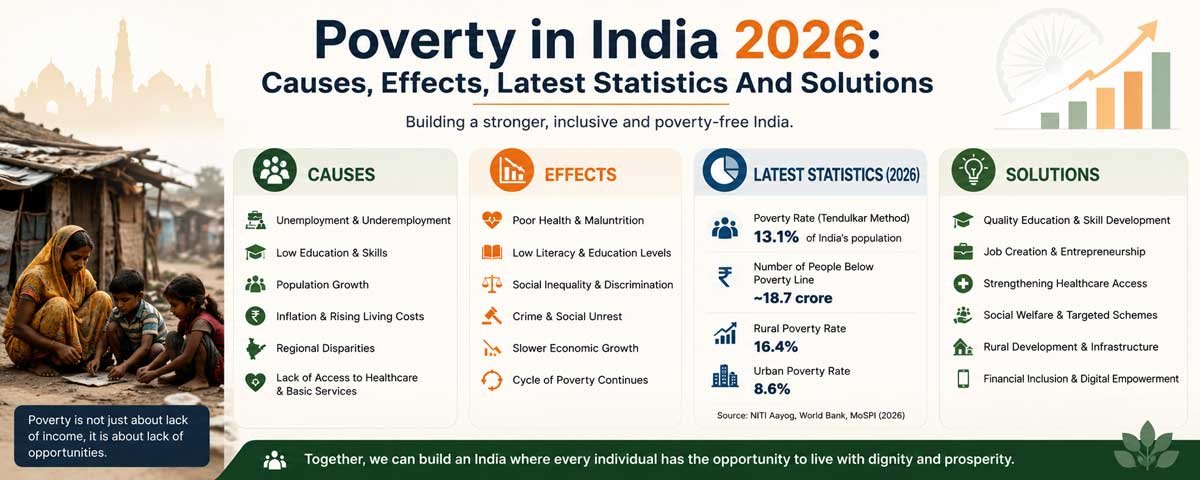
Poverty in India 2026 remains one of the country's most pressing social and economic challenges…
One-Third of the World’s Child Brides Live in India: Causes, Impact And Solutions
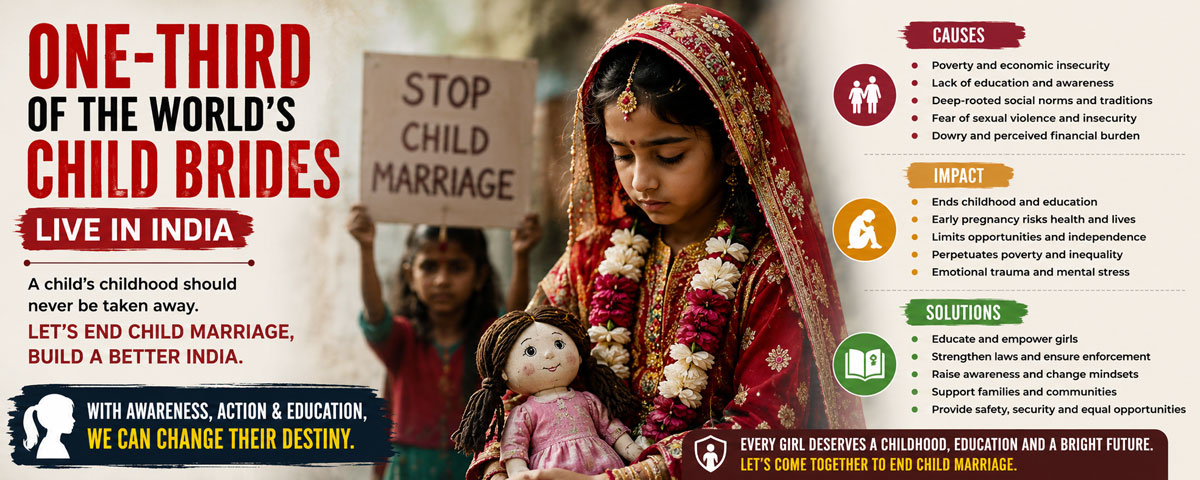
One-third of the world’s child brides live in India, making child marriage one of the country’s biggest social challenges. Every year, thousands of girls lose the chance to enjoy childhood, continue their education, and make their own life choices because they are married before turning 18.
UNICEF estimates that India is home to nearly 223 million child brides. Although the country has made steady progress in reducing child marriage, millions of girls remain at risk. Poverty, limited access to education, and long-standing social practices continue to drive this issue in many communities.
Education can change this reality. Girls who stay in school are more likely to delay marriage, build careers, and become financially independent. That is why Shaksham Foundation focuses on helping vulnerable children continue their education through its Education Support Programme.
In this article, you’ll learn why one-third of the world’s child brides live in India, what causes child marriage, how it affects girls, and what can be done to end this harmful practice.
Why One-Third of the World’s Child Brides Live in India
The fact that one-third of the world’s child brides live in India reflects both the country’s large population and the inequalities many families continue to face. Child marriage affects different regions, religions, and communities, although some states report much higher numbers than others.
According to UNICEF, more than half of India’s child brides live in Uttar Pradesh, Bihar, West Bengal, Maharashtra, and Madhya Pradesh. Bihar and West Bengal continue to record some of the highest rates, while several other states have achieved faster progress through education and awareness programmes.
There is encouraging news. National surveys show that child marriage has declined significantly over the last two decades. Better access to schools, stronger laws, and community awareness have all contributed to this progress.
However, the progress has not been equal across the country. Many girls still leave school because of poverty, social pressure, or limited opportunities. As a result, they remain vulnerable to early marriage.
Communities can change this trend. Families, schools, local authorities, and organisations all have an important role in protecting children. When girls receive quality education and the right support, they are far more likely to complete school before marriage.
Ending child marriage requires long-term commitment. It also requires continued investment in education, awareness, and child protection so that every girl has the opportunity to choose her own future.
Why Does Child Marriage Continue in India?
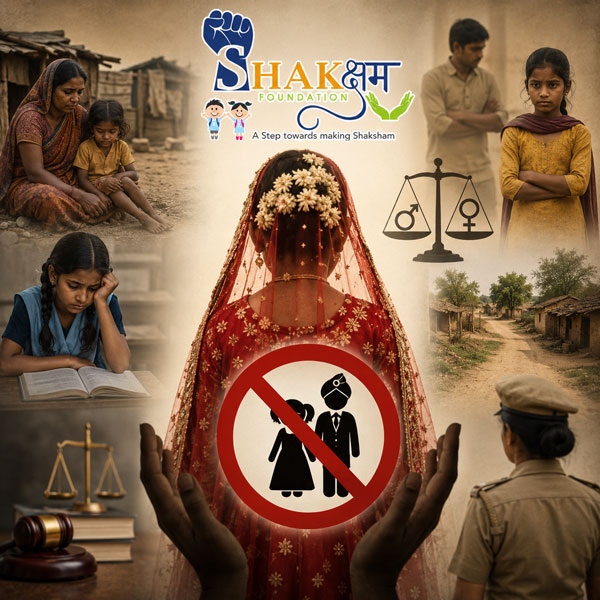
Understanding why one-third of the world’s child brides live in India means looking beyond the numbers. Child marriage is rarely caused by a single issue. Instead, it develops through a combination of poverty, limited education, gender inequality, and social expectations.
Many families want the best for their daughters. However, financial hardship and traditional beliefs can influence decisions that affect a girl’s future. Breaking this cycle requires long-term support and greater awareness.
Poverty Continues to Drive Child Marriage
Poverty remains one of the biggest reasons behind child marriage in India. Families with limited income often struggle to pay for food, healthcare, and education. As a result, some believe that marrying their daughters at a young age will reduce financial pressure.
Although this decision may seem practical in difficult circumstances, it often limits a girl’s opportunities for education and employment. Supporting families through education and financial assistance can help change this pattern.
Through its Education Support Programme, Shaksham Foundation helps children from vulnerable communities continue their education and build brighter futures.
Limited Access to Education
Education plays a vital role in preventing child marriage. Girls who remain in school are more likely to complete their studies, develop valuable skills, and delay marriage until adulthood.
Unfortunately, many girls leave school because of financial difficulties, household responsibilities, or a lack of nearby educational facilities. Once education stops, the likelihood of early marriage often increases.
Expanding access to quality education gives girls more opportunities to become independent while improving their future career prospects.
Gender Inequality Still Exists
Gender inequality continues to influence family decisions in many communities. Traditional beliefs sometimes place greater value on boys’ education while expecting girls to marry and manage household responsibilities.
Changing these attitudes takes time. Community awareness programmes, education campaigns, and positive role models can encourage families to invest equally in their daughters’ futures.
Challenges in Rural Communities
Girls living in rural areas often face additional barriers. Schools may be located far from their homes, transportation can be limited, and employment opportunities are often fewer than in urban areas.
Because of these challenges, some families consider marriage the safest option. Improving educational access and community support can help girls stay in school for longer.
Better Enforcement of Child Protection Laws Is Essential
India has laws that prohibit child marriage, including the Prohibition of Child Marriage Act, 2006. Even so, effective implementation remains essential in many parts of the country.
Greater awareness, timely reporting, and stronger coordination between schools, communities, and local authorities can help prevent child marriages before they happen.
According to UNICEF India, improving education, supporting families, and strengthening child protection systems are among the most effective ways to reduce child marriage.
The Lasting Impact of Child Marriage on Girls
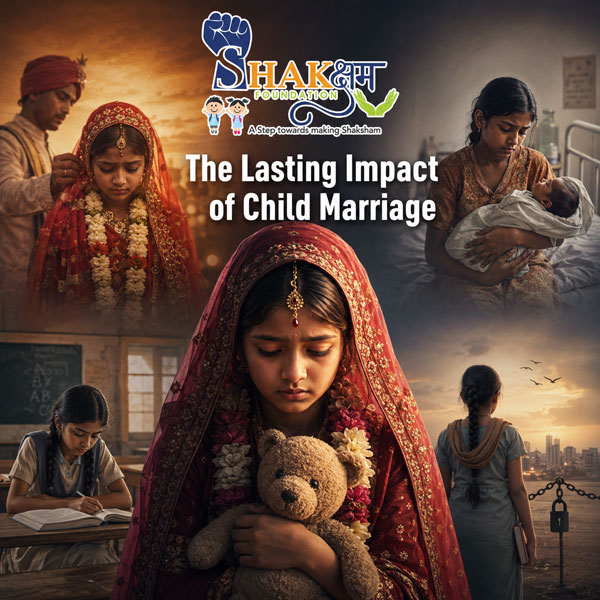
Child marriage affects far more than a girl’s childhood. It influences her education, health, financial independence, and future opportunities. This is why the fact that one-third of the world’s child brides live in India remains a major concern for child rights organisations around the world.
Many girls who marry before the age of 18 leave school permanently. As a result, they miss opportunities to develop skills, pursue careers, and build independent lives. The effects often continue into adulthood and can also affect future generations.
Early Pregnancy Can Affect Health
Girls who marry early are more likely to become mothers during their teenage years. At this stage, their bodies may not be fully prepared for pregnancy and childbirth. This can increase health risks for both the mother and the baby.
Access to proper healthcare, nutrition, and medical guidance helps reduce these risks. Delaying marriage also gives girls more time to complete their education and make informed decisions about their future.
Education Often Ends Too Soon
Leaving school is one of the most common consequences of child marriage. Once married, many girls find it difficult to continue their studies because of household responsibilities or early motherhood.
Completing an education creates better career opportunities and improves financial security. It also helps girls develop confidence and make independent choices throughout their lives.
At Shaksham Foundation, we believe education gives children the foundation they need to build a brighter future. Our Education Support Programme helps vulnerable children stay in school and continue learning.
Financial Independence Becomes More Difficult
Girls who leave school early often have fewer employment opportunities later in life. Without education or vocational skills, finding stable and well-paying work becomes much more challenging.
When girls complete their education, they are more likely to secure employment, support their families, and contribute to their communities. Investing in education therefore benefits both individuals and society.
Childhood Ends Before Its Time
Every child deserves the chance to learn, grow, and enjoy childhood. Early marriage replaces those experiences with adult responsibilities long before girls are ready. Many also lose valuable opportunities to participate in school activities, build friendships, and develop important life skills.
Protecting childhood allows girls to reach their full potential and make decisions about their own future when they are ready.
What Will It Take to End Child Marriage in India?
Ending child marriage requires consistent efforts from families, communities, schools, governments, and non-profit organisations. Although progress has been encouraging, much more work remains to ensure every girl has the opportunity to complete her education before marriage.
Keep Girls in School
Education remains one of the most effective ways to prevent child marriage. Girls who stay in school are more likely to delay marriage, gain practical skills, and build successful careers.
Supporting education also gives families greater confidence in their daughters’ future. This simple step can transform lives and reduce child marriage over time.
Support Families Through Community Programmes
Families facing financial hardship often need practical support instead of difficult choices. Community programmes, scholarships, awareness campaigns, and skill development initiatives can reduce the pressures that contribute to child marriage.
Working together also helps communities recognise the long-term value of educating girls and protecting their rights.
Strengthen Awareness and Law Enforcement
India has laws that prohibit child marriage, including the Prohibition of Child Marriage Act, 2006. Effective implementation, however, depends on awareness, timely reporting, and cooperation between local authorities and communities.
Teachers, healthcare workers, local leaders, and child protection officials all have an important role in identifying children who may be at risk and ensuring they receive the support they need.
According to UNICEF, combining education, economic support, legal protection, and community engagement remains one of the most successful ways to reduce child marriage worldwide.
When girls stay in school and families receive the right support, fewer children become part of the statistic that one-third of the world’s child brides live in India. Every child deserves the opportunity to choose her own future with confidence and dignity.
How You Can Help End Child Marriage in India
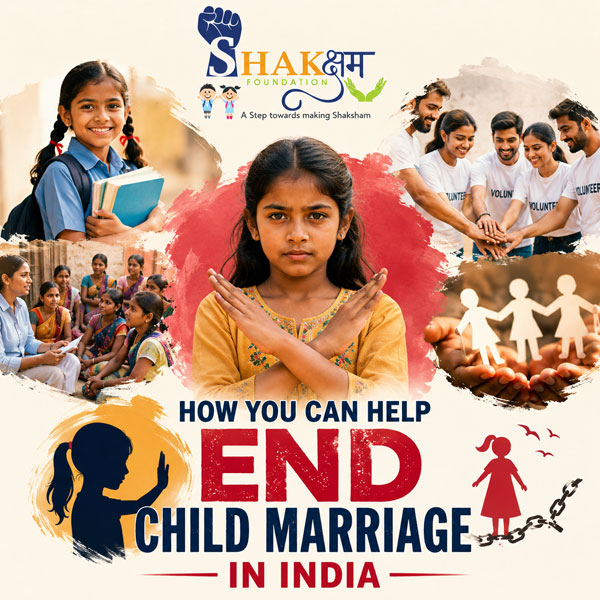
Ending child marriage is not the responsibility of one organisation or the government alone. Families, educators, businesses, communities, and individuals all have a role to play. Even small actions can create opportunities that help girls stay in school and build better futures.
Support a Girl’s Education
Education remains one of the strongest tools for preventing child marriage. When girls continue their studies, they gain knowledge, confidence, and skills that prepare them for adulthood. They are also more likely to delay marriage and become financially independent.
If you want to make a lasting difference, consider supporting initiatives that remove financial barriers to education. Through its Education Support Programme, Shaksham Foundation helps children from vulnerable communities continue their education and work towards a brighter future.
Raise Awareness Within Your Community
Many families are unaware of the long-term consequences of child marriage. Sharing reliable information can encourage positive conversations and help parents understand the importance of keeping girls in school.
Awareness campaigns, school programmes, and community discussions also play an important role in changing attitudes and protecting children’s rights.
Volunteer Your Time and Skills
Volunteers help strengthen community programmes by mentoring children, supporting educational activities, and participating in awareness initiatives. Every contribution, whether large or small, can positively influence a child’s future.
Support Organisations Working on Child Welfare
Non-profit organisations continue to support vulnerable children through education, healthcare, nutrition, and community outreach. By supporting trusted organisations, you can help create safer environments where children have the opportunity to learn and grow.
Learn more about the programmes offered by Shaksham Foundation and discover how your support can help children build brighter futures.
Conclusion
One-third of the world’s child brides live in India, but this statistic does not define the country’s future. Progress over the past two decades shows that meaningful change is possible when education, community support, and child protection work together.
Every girl deserves the chance to complete her education, develop valuable skills, and decide her future without pressure or fear. Families, schools, communities, and organisations all have an important role in making that future possible.
At Shaksham Foundation, we believe education creates opportunities that last a lifetime. Our programmes focus on helping vulnerable children stay in school, build confidence, and achieve their full potential.
If you would like to support this mission, you can contribute through our Donate Now page or learn more about our Education Support Programme. Together, we can help more girls complete their education and create brighter futures.
Frequently Asked Questions
Why do one-third of the world’s child brides live in India?
India has a large population, and factors such as poverty, limited access to education, gender inequality, and social traditions continue to contribute to child marriage in several parts of the country.
What is the legal age of marriage for girls in India?
Under the Prohibition of Child Marriage Act, 2006, the legal minimum age of marriage for women is 18 years, while the legal age for men is 21 years.
How does education help prevent child marriage?
Education gives girls the opportunity to complete their studies, develop life skills, and become financially independent. Girls who remain in school are significantly less likely to marry before the age of 18.
Which states have the highest number of child marriages in India?
According to UNICEF, Uttar Pradesh, Bihar, West Bengal, Maharashtra, and Madhya Pradesh account for more than half of India’s child brides.
What are the long-term effects of child marriage?
Child marriage can lead to school dropout, early pregnancy, limited employment opportunities, financial dependence, and long-term health challenges. It also affects a girl’s ability to make independent life decisions.
How is Shaksham Foundation helping vulnerable children?
Shaksham Foundation supports vulnerable children through education, community outreach, and programmes that help children remain in school.

Related Posts
Comments (0)