
Education can change the direction of a girl's life. It gives her knowledge, builds confidence,…
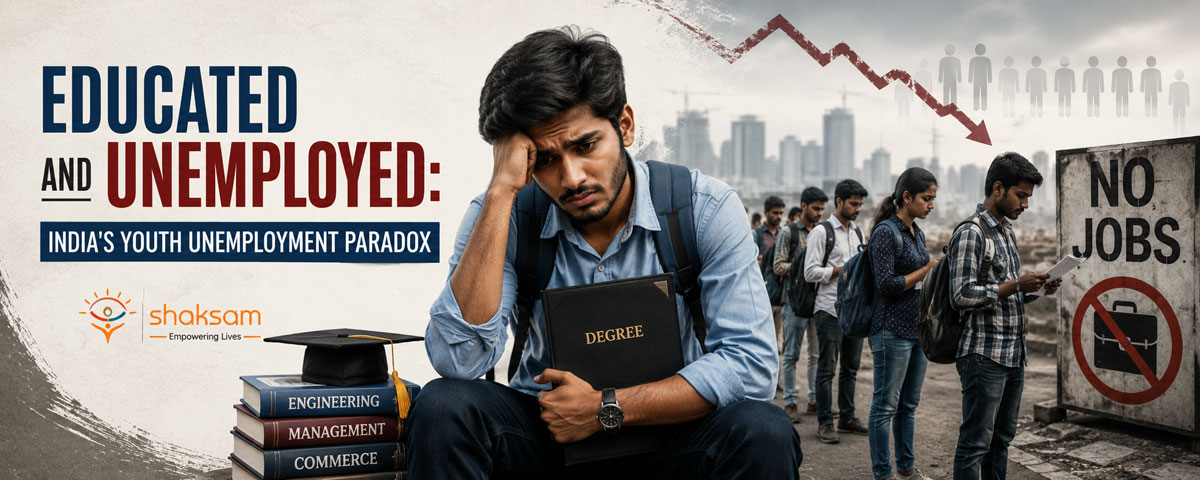
Educated and Unemployed: India’s Youth Unemployment Paradox
For generations, education has been seen as the most reliable path to a secure future in India. Parents encourage their children to study hard, earn a degree, and build a successful career. However, that promise is becoming harder to fulfil. Today, thousands of graduates complete college every year only to find themselves struggling to secure stable employment.
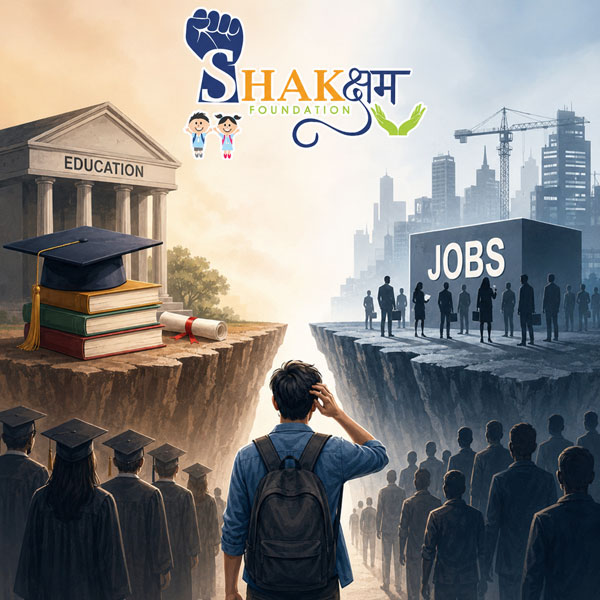
India’s youth unemployment paradox highlights a growing disconnect between education and employment. While more young people are earning degrees than ever before, suitable job opportunities have not increased at the same pace. As a result, many educated young adults spend months or even years searching for work that matches their qualifications.
According to the Periodic Labour Force Survey (PLFS), India’s overall unemployment rate appears relatively low. However, the situation is very different for educated youth. Research published in the State of Working India Report by Azim Premji University shows that unemployment is significantly higher among young graduates, raising important questions about the country’s education system and labour market.
Behind every statistic is a personal story. Many young people invest years in higher education, hoping it will improve their future. When suitable employment remains out of reach, the financial and emotional impact extends beyond individuals to their families and communities.
Creating opportunities begins much earlier than graduation. At Shaksham Foundation, we believe that quality education should prepare children for lifelong success, not simply help them earn certificates. Through our Education Support Programme, we help children from underserved communities continue their education, develop confidence, and build stronger foundations for future employment.
In this article, we’ll explore why India’s youth unemployment paradox continues to grow, the factors driving educated unemployment, its long-term impact on young people, and the practical steps needed to bridge the gap between education and meaningful employment.
The Numbers Behind India’s Youth Unemployment Paradox
At first glance, India’s employment figures appear encouraging. National surveys suggest that unemployment has remained relatively low compared to many economies around the world. However, looking only at the overall unemployment rate does not reveal the full picture.
When employment data is analysed by education level and age, a different reality emerges. Young graduates face considerably greater challenges in finding suitable jobs than people with lower levels of education. According to the State of Working India Report, a significant percentage of graduates under the age of 25 remain unemployed despite completing higher education.
This gap reflects one of the biggest employment challenges facing India today. Every year, millions of students graduate from universities and colleges with the expectation of entering professional careers. Unfortunately, the number of quality jobs has not grown at the same pace.
The result is a growing pool of educated young people competing for a limited number of formal employment opportunities. Many eventually accept temporary work, freelance assignments, gig economy jobs, or positions that do not require the qualifications they worked so hard to earn.
India’s demographic advantage is often described as one of its greatest strengths. However, without stronger links between education, skill development, and employment, that advantage could become one of the country’s biggest economic challenges.
Why Are Educated Youth Struggling to Find Jobs?
The growing number of unemployed graduates is not the result of a single problem. Instead, it reflects several challenges that continue to affect India’s education system and labour market.
While higher education has become more accessible over the past two decades, employability has not improved at the same pace. Many graduates leave college with academic knowledge but limited practical experience, making it difficult to meet changing industry expectations.
The Gap Between Education and Industry Skills
One of the biggest reasons behind India’s youth unemployment paradox is the mismatch between what students learn in classrooms and what employers expect in the workplace.
Many organisations now prioritise practical skills such as communication, digital literacy, critical thinking, teamwork, and problem-solving alongside academic qualifications. Graduates who lack these workplace skills often find themselves competing for fewer opportunities despite holding recognised degrees.
Helping children receive quality education from an early stage, alongside practical learning opportunities, remains essential for improving future employability. Through its Education Support Programme, Shaksham Foundation works to strengthen educational foundations that can create better opportunities in later life.
Limited Creation of Quality Jobs
India produces millions of graduates every year, but the number of stable, well-paying jobs has not kept pace. While sectors such as technology, healthcare, and financial services continue to expand, they cannot absorb every graduate entering the workforce.
As a result, many young people spend months searching for employment or accept jobs that do not match their education. Some move into temporary work, freelancing, or the gig economy simply to earn an income while continuing their job search.
According to the International Labour Organization (ILO), creating productive employment opportunities for young people remains one of the biggest challenges for developing economies. Expanding industries and encouraging entrepreneurship will play an important role in addressing this gap.
Growing Competition for Every Vacancy
Competition has become another major reason behind India’s youth unemployment paradox. A single government recruitment drive or private sector opening often attracts thousands, and sometimes even lakhs, of applicants.
Graduates with similar qualifications compete for a limited number of positions, making the recruitment process increasingly competitive. Even highly capable candidates may remain unemployed simply because demand for jobs far exceeds the available opportunities.
This intense competition also encourages many young people to continue preparing for government examinations for several years, hoping to secure long-term employment.
Limited Exposure to Practical Experience
Academic knowledge alone is no longer enough in today’s job market. Employers increasingly look for candidates who have gained practical experience through internships, apprenticeships, volunteering, or project-based learning.
Unfortunately, many students complete their education without receiving enough opportunities to apply what they have learned in real-world situations. This lack of workplace exposure often affects their confidence during interviews and reduces their employability.
Educational institutions, businesses, and community organisations all have an important role in creating more opportunities for hands-on learning before students graduate.

How Educated Unemployment Affects Young People and Families
Educated unemployment is much more than an economic concern. It affects confidence, financial stability, and long-term career growth. Many graduates invest years in higher education with the hope of building better lives, only to face repeated rejection after graduation.
When employment remains uncertain, the emotional impact can become just as significant as the financial burden. Families that make sacrifices to fund higher education also experience disappointment when those efforts do not lead to stable careers.
Financial Pressure Continues to Increase
Many families spend a significant portion of their savings on college fees, accommodation, books, and other educational expenses. When graduates remain unemployed, recovering that investment becomes difficult.
Some young people also take education loans, adding further financial pressure while they continue searching for suitable employment. Delayed earnings can affect long-term financial goals, including supporting parents, purchasing a home, or pursuing higher studies.
Loss of Confidence and Career Motivation
Repeated job rejections can gradually affect self-confidence. Many graduates begin to question their abilities despite working hard throughout their education.
Over time, prolonged unemployment may reduce motivation, discourage career development, and create uncertainty about future goals. Access to career guidance, mentorship, and practical skill development can help young people remain focused and better prepared for new opportunities.
At Shaksham Foundation, we believe education should prepare children for lifelong success rather than simply helping them complete school. Alongside our Education Support Programme, we continue working with communities to strengthen learning opportunities that can improve future employability and long-term self-reliance.
Communities Also Feel the Impact
When educated young people struggle to find meaningful employment, the effects extend beyond individual families. Communities lose valuable talent, businesses face skill shortages in specialised areas, and economic growth slows as fewer people participate fully in the workforce.
Addressing India’s youth unemployment paradox requires long-term investment in quality education, practical training, industry collaboration, and career guidance. Strengthening these areas can help ensure that education leads to real opportunities rather than prolonged uncertainty.
Bridging the Gap Between Education and Employment
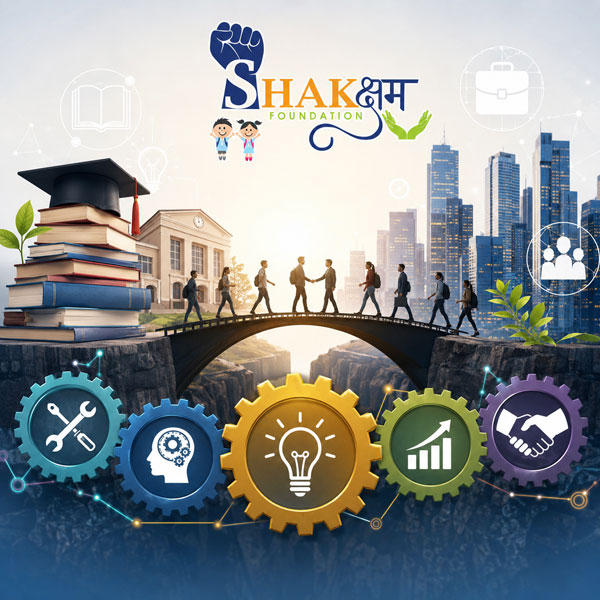
Solving India’s youth unemployment paradox requires more than creating additional jobs. It also means ensuring that education equips students with the knowledge, practical skills, and confidence needed to succeed in today’s changing job market.
Schools, colleges, employers, communities, and non-profit organisations all have an important role in preparing young people for meaningful careers. When education and industry work together, graduates are better prepared to transition from classrooms to workplaces.
Focus on Skills That Employers Need
Degrees continue to hold value, but employers increasingly look for candidates who can apply their knowledge in practical situations. Technical expertise, communication skills, teamwork, digital literacy, adaptability, and critical thinking have become essential across almost every industry.
Educational institutions can strengthen employability by introducing skill-based learning, internships, industry projects, and vocational training alongside traditional academic programmes. This approach helps students develop workplace readiness before they graduate.
Career Guidance Should Begin Earlier
Many students choose courses without fully understanding future career opportunities or labour market trends. As a result, they often complete their education only to realise that demand for their qualifications is limited.
Career counselling in schools and colleges can help students make informed decisions based on their interests, abilities, and employment prospects. Guidance from teachers, mentors, and industry professionals also allows students to plan realistic career pathways and develop relevant skills much earlier.
Encourage Entrepreneurship and Innovation
Not every graduate needs to depend on traditional employment. Entrepreneurship is creating new opportunities for young people to build businesses, generate employment, and contribute to India’s growing economy.
Government initiatives such as Startup India and Stand-Up India encourage innovation, support new entrepreneurs, and promote self-employment. With the right guidance and access to resources, many young people can transform their ideas into sustainable businesses.
Stronger Partnerships Between Industry and Education
Educational institutions and employers need to work more closely together. Industry partnerships can help colleges update their curriculum, offer internships, organise practical workshops, and expose students to real workplace environments.
Such collaboration ensures that graduates leave college with both academic qualifications and practical experience, making them more competitive in the job market.

How Shaksham Foundation Is Helping Build Better Futures
At Shaksham Foundation, we understand that meaningful employment begins with access to quality education. Many children from underserved communities never receive the opportunities they need to complete their education or develop essential life skills.
Through our Education Support Programme, we help children continue their studies by reducing barriers that often force them to leave school early. We believe education should create opportunities that last a lifetime, not end with a certificate.
Our community initiatives also promote confidence, personal development, and lifelong learning. By supporting education at the grassroots level, we aim to give young people a stronger foundation for future careers and greater financial independence.
Addressing India’s youth unemployment paradox begins long before graduation. It starts by ensuring that every child has access to quality education, encouragement, and opportunities to reach their full potential.
India has one of the world’s youngest populations, giving the country enormous potential for economic growth. Turning this demographic advantage into long-term success will require continued investment in education, skill development, innovation, and employment opportunities.
When students receive the right support from an early age, they are far more likely to become confident, capable, and career-ready adults. Closing the gap between education and employability is not only essential for individual success but also for building a stronger and more prosperous India.
Conclusion
India’s youth unemployment paradox is one of the biggest challenges facing the country’s future. Every year, millions of young people complete their education with the hope of building successful careers. However, many struggle to find employment that matches their qualifications and aspirations.
The solution goes beyond creating more jobs. India also needs an education system that equips students with practical skills, encourages innovation, strengthens industry partnerships, and prepares graduates for an evolving job market. When education and employability move together, young people have a far better chance of building stable and rewarding careers.
At Shaksham Foundation, we believe every child deserves the opportunity to learn, grow, and build a better future. Through our Education Support Programme, we help children from underserved communities continue their education and develop the confidence they need to succeed in life.
Creating lasting change starts with investing in education today. By supporting children, strengthening learning opportunities, and promoting skill development, we can help transform India’s young population into one of its greatest strengths.
If you would like to support our mission, visit the Shaksham Foundation website or contribute through our Donate Now page. Together, we can help build a future where education leads to opportunity, confidence, and meaningful employment.
Frequently Asked Questions
What is India’s youth unemployment paradox?
India’s youth unemployment paradox refers to the growing gap between higher education and employment. Although more young people are earning college degrees, many struggle to find suitable jobs that match their qualifications and skills.
Why are educated graduates unemployed in India?
Educated unemployment is driven by several factors, including a mismatch between academic learning and industry requirements, limited availability of quality jobs, increasing competition, and insufficient practical work experience among graduates.
How does the skills gap affect employment opportunities?
Many employers seek candidates with practical skills such as communication, digital literacy, teamwork, and problem-solving. Graduates who lack these workplace skills often find it more difficult to secure suitable employment despite having academic qualifications.
How can India reduce youth unemployment?
Improving the quality of education, expanding vocational training, strengthening partnerships between educational institutions and industries, promoting entrepreneurship, and providing better career guidance can help reduce youth unemployment over time.
Why is quality education important for employability?
Quality education helps students build knowledge, practical skills, confidence, and adaptability. These qualities improve employability and prepare young people to meet changing workplace expectations throughout their careers.
How is Shaksham Foundation helping children build better futures?
Shaksham Foundation supports children through its Education Support Programme, helping them continue their education and develop stronger foundations for lifelong learning, future careers, and financial independence.
Sources and References

Related Posts

Comments (0)