
For millions of families across India, financial security can disappear overnight. A sudden illness, a…
Poverty in India 2026: Causes, Effects, Latest Statistics And Solutions
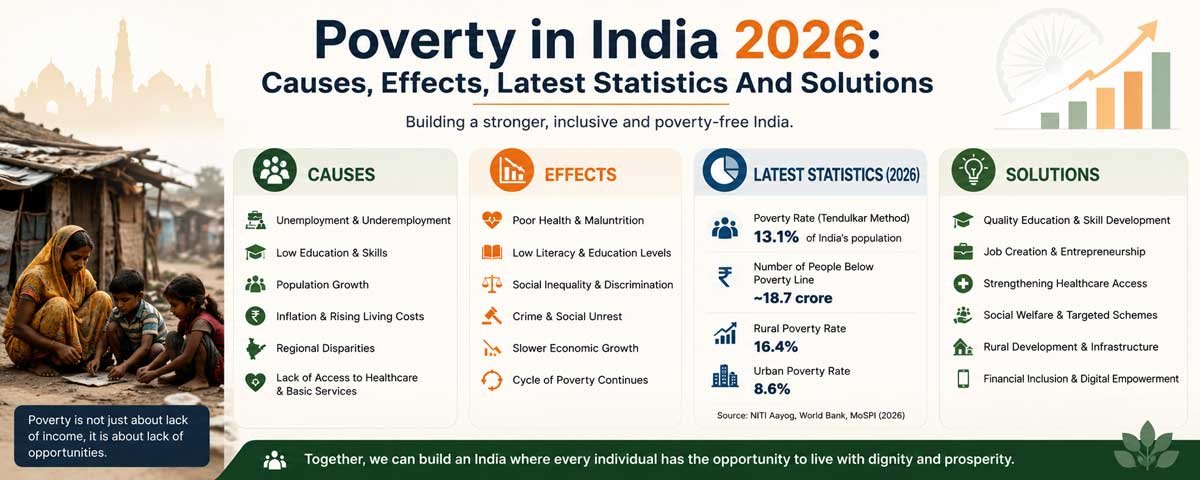
Poverty in India 2026 remains one of the country’s most pressing social and economic challenges. India has emerged as one of the world’s fastest-growing economies, yet millions of families continue to struggle to afford nutritious food, quality education, healthcare, safe housing, and stable employment. While national poverty levels have declined significantly over the past decade, financial insecurity continues to affect children, women, elderly citizens, and rural communities across the country.
According to recent reports published by the World Bank and NITI Aayog, India has lifted millions of people out of multidimensional poverty through improved access to education, healthcare, sanitation, electricity, and financial inclusion. However, progress has not been uniform. Many households still live one medical emergency, job loss, crop failure, or economic setback away from falling back into poverty.
Poverty is much more than the absence of income. It limits opportunities, affects physical and mental health, interrupts education, increases hunger, and prevents families from achieving long-term financial stability. Breaking this cycle requires sustained efforts from governments, businesses, charitable organisations, and local communities working together towards meaningful social development.
At the grassroots level, organisations such as Shaksham Foundation continue to support vulnerable communities through programmes focused on education, healthcare, women’s empowerment, orphan care, elderly support, food assistance, and community development across Ahmedabad and surrounding regions.
Poverty in India 2026: Key Highlights
- India has significantly reduced multidimensional poverty over the past decade.
- Millions of families still struggle with unemployment, inflation, rising healthcare costs, and food insecurity.
- Children remain among the most affected due to interrupted education and poor nutrition.
- Women, elderly citizens, persons with disabilities, and rural communities continue to face greater financial vulnerability.
- Government welfare schemes and NGOs both play an important role in reducing poverty and improving quality of life.
What Is Poverty in India?
Poverty in India refers to the condition where individuals or families do not have adequate financial resources or access to essential services required for a dignified standard of living. These necessities include nutritious food, clean drinking water, healthcare, education, housing, sanitation, electricity, and sustainable employment.
Modern poverty is no longer measured only by income. Today, experts also evaluate whether people have access to opportunities that enable them to live healthy, productive, and secure lives. This broader approach helps identify communities that continue to experience deprivation despite improvements in overall economic growth.
Rather than affecting only one aspect of life, poverty creates a chain reaction. A child who cannot complete school may struggle to secure stable employment later in life. Limited income often results in poor nutrition and delayed medical treatment, while rising healthcare expenses can push an entire household into debt. These interconnected challenges make poverty one of the most complex development issues facing India today.
Creating sustainable change therefore requires long-term investment in education, healthcare, livelihood opportunities, women’s empowerment, environmental sustainability, and community welfare. Through initiatives like Education Support, many children receive opportunities to continue learning despite financial hardship, helping break the cycle of poverty for future generations.
Understanding the Different Types of Poverty in India
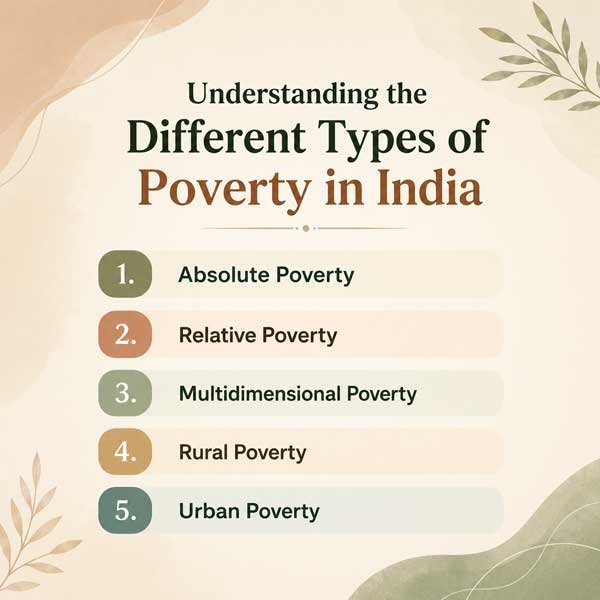
Poverty is not the same for every household. Some families struggle to earn enough for daily meals, while others have an income but still lack access to education, healthcare, clean drinking water, or proper housing. To understand the real scale of poverty in India, economists and policymakers classify poverty into different categories. These classifications help governments, NGOs, and development organisations design targeted programmes that address specific challenges faced by vulnerable communities.
1. Absolute Poverty
Absolute poverty refers to a situation where people cannot afford the minimum essentials required for survival. This includes nutritious food, safe drinking water, basic clothing, shelter, and healthcare. Families living in absolute poverty often struggle to meet their daily needs and are highly vulnerable to illness, unemployment, and unexpected financial emergencies.
Although India has reduced the number of people living in extreme poverty over the last decade, many households continue to depend on government welfare schemes and charitable organisations to meet their basic needs.
2. Relative Poverty
Relative poverty measures financial inequality within society. A family may earn enough to survive but still have a much lower standard of living compared to the majority of the population. Limited access to quality education, digital technology, healthcare, secure housing, and employment opportunities often places these households at a disadvantage.
Relative poverty highlights the gap between economic growth and equal access to opportunities. Reducing this gap requires better education, employment opportunities, financial inclusion, and social welfare programmes.
3. Multidimensional Poverty
Today, poverty is no longer measured by income alone. The Multidimensional Poverty Index (MPI), developed by the United Nations Development Programme (UNDP) and the Oxford Poverty and Human Development Initiative (OPHI), evaluates poverty across multiple indicators that directly affect everyday life.
These indicators include:
- Nutrition
- Child mortality
- Years of schooling
- School attendance
- Access to clean cooking fuel
- Sanitation facilities
- Safe drinking water
- Electricity
- Housing quality
- Ownership of basic household assets
A household may earn above the official poverty line but still experience multidimensional poverty if it lacks access to these essential services. This broader approach provides a more accurate understanding of deprivation and helps identify families requiring immediate support.
4. Rural Poverty
Rural poverty remains a significant challenge in India because a large section of the population depends on agriculture and seasonal employment. Small farmers, agricultural labourers, and daily wage workers often face irregular income due to unpredictable weather, fluctuating crop prices, rising farming costs, and limited employment opportunities outside agriculture.
Improving rural education, healthcare, infrastructure, irrigation, and skill development remains essential for creating sustainable livelihoods and reducing long-term poverty.
5. Urban Poverty
Urban poverty has increased alongside rapid urbanisation. Every year, thousands of families migrate to cities in search of employment, hoping for a better future. However, many end up working in the informal sector where income is uncertain, and access to affordable housing, healthcare, and sanitation remains limited.
Construction workers, domestic helpers, street vendors, delivery workers, sanitation workers, and other informal employees often face financial instability despite living in economically developed cities.
Poverty in India 2026: Latest Statistics
Understanding the latest statistics helps measure how far India has progressed in reducing poverty and where challenges continue to exist. Over the last decade, improvements in education, sanitation, healthcare, financial inclusion, and government welfare schemes have lifted millions of people out of multidimensional poverty. However, poverty remains a serious concern for millions of families who continue to face financial instability and limited access to essential services.
According to NITI Aayog, India witnessed one of the fastest reductions in multidimensional poverty between 2013-14 and 2022-23. During this period, nearly 24.8 crore people moved out of multidimensional poverty through better access to education, healthcare, sanitation, electricity, clean cooking fuel, and improved living conditions.
Similarly, the World Bank reported a sharp decline in extreme poverty over the past decade. Despite this achievement, millions of households continue to remain economically vulnerable. A sudden illness, job loss, inflation, crop failure, or natural disaster can quickly push financially unstable families back below the poverty line.
Key Poverty Statistics in India
| Indicator | Latest Available Data |
|---|---|
| People lifted out of multidimensional poverty | Approximately 24.8 crore (2013-14 to 2022-23) |
| Multidimensional Poverty Rate (2022-23) | 11.28% |
| Multidimensional Poverty Rate (2013-14) | 29.17% |
| Estimated Extreme Poverty Rate | Around 5.3% |
| States showing the largest reduction | Uttar Pradesh, Bihar, Madhya Pradesh, Rajasthan |
| First state declared free from extreme poverty | Kerala |
What Do These Numbers Actually Mean?
At first glance, these statistics appear highly encouraging, and they certainly reflect meaningful progress. Millions of families now have better access to electricity, sanitation, education, healthcare, and financial services than they did a decade ago. Government welfare programmes, digital financial inclusion, improved infrastructure, and economic growth have all contributed to this transformation.
However, statistics alone cannot fully represent the realities experienced by vulnerable communities. Many households that are no longer officially classified as poor still face daily financial uncertainty. Their income may be enough to survive, but not enough to absorb unexpected expenses.
For example, a construction worker earning daily wages may support an entire family. If illness prevents that individual from working for several weeks, household income immediately stops while medical expenses continue to rise. Without savings or social security, families often borrow money, sell assets, or reduce spending on education and nutrition just to manage everyday expenses.
These situations demonstrate why poverty should not be viewed only through income-based measurements. Financial vulnerability continues to affect millions of households even after they move above the official poverty line.
Which States Continue to Face the Greatest Challenges?
Although poverty exists across India, its impact varies considerably between states and regions. States with large rural populations, limited industrial development, lower literacy levels, and greater dependence on agriculture continue to experience higher poverty rates than economically developed regions.
Several states have made remarkable progress during the last decade, yet rural communities, tribal populations, migrant workers, and informal labourers remain particularly vulnerable to economic shocks.
Reducing regional inequality requires continuous investment in education, healthcare, employment generation, infrastructure, women’s economic participation, and skill development. Long-term development projects also play an important role in creating sustainable opportunities for future generations. Learn more about these initiatives through Future Projects.
India’s Progress Is Real, But the Journey Is Not Over
India’s success in reducing multidimensional poverty has received international recognition. Improvements in sanitation, rural electrification, financial inclusion, digital governance, and welfare delivery have transformed the lives of millions of people.
Despite this progress, challenges such as unemployment, inflation, climate change, food insecurity, healthcare costs, educational inequality, and regional disparities continue to affect vulnerable households. Achieving long-term poverty reduction requires sustained investment in human development alongside economic growth.
The next section explores the major causes of poverty in India and explains why financial hardship continues to affect millions of families despite the country’s remarkable economic progress.
Major Causes of Poverty in India
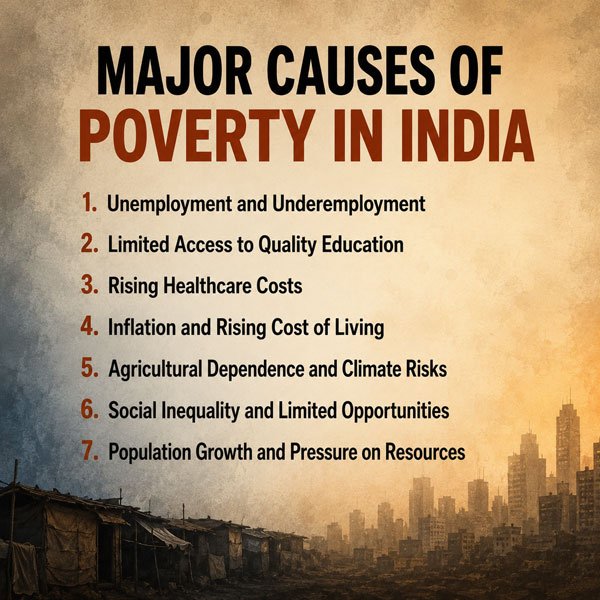
Poverty in India is not caused by a single factor. It develops through a combination of economic, social, educational, and environmental challenges that make it difficult for families to achieve financial stability. While economic growth has created new opportunities, many households continue to face barriers that prevent them from improving their quality of life.
Understanding these root causes is essential because lasting solutions can only be achieved by addressing the underlying problems rather than their symptoms. Below are the major reasons why poverty continues to affect millions of people across India.
1. Unemployment and Underemployment
Unemployment remains one of the biggest contributors to poverty in India. Every year, millions of young people enter the workforce, but the number of secure and well-paying jobs does not always keep pace with demand. As a result, many individuals either remain unemployed or accept low-paying jobs that offer little financial security.
Underemployment is equally challenging. Many people work long hours but earn wages that are insufficient to support their families. Daily wage labourers, construction workers, agricultural labourers, domestic workers, and workers in the informal sector often experience irregular employment and unpredictable income throughout the year.
This financial instability makes it difficult to afford nutritious food, education, healthcare, and housing, increasing the likelihood of remaining trapped in poverty.
2. Limited Access to Quality Education
Education has long been recognised as one of the most effective ways to reduce poverty. However, many children from economically weaker families continue to face barriers that prevent them from completing their education.
School fees, transportation expenses, uniforms, books, digital learning devices, and family financial responsibilities often force children to leave school before completing their studies. Once education is interrupted, employment opportunities become limited, making it more difficult to achieve financial independence.
Supporting children through initiatives such as Education Support helps improve school attendance and allows students to develop the knowledge and skills needed for better employment in the future.
3. Rising Healthcare Costs
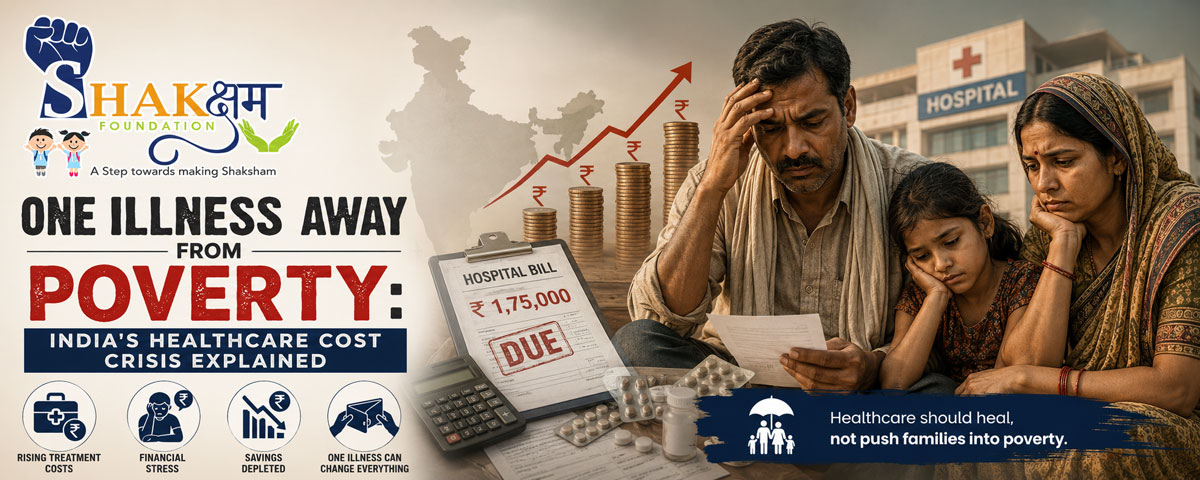
Healthcare expenses continue to push thousands of Indian families into financial hardship each year. Even households with a stable source of income can quickly face debt when confronted with serious illnesses, accidents, surgeries, or long-term medical treatment.
According to several national and international studies, out-of-pocket healthcare expenditure remains one of the leading reasons families experience financial distress. Medical emergencies often require borrowing money, selling valuable assets, or reducing household spending on education and nutrition.
Affordable healthcare services remain essential for long-term poverty reduction. Community initiatives that improve access to medical treatment, preventive healthcare, and emergency assistance help reduce this financial burden while improving overall well-being.
4. Inflation and Rising Cost of Living
Inflation affects every household, but its impact is particularly severe for families with limited income. Rising prices of food, fuel, transportation, electricity, education, and healthcare reduce purchasing power and make it increasingly difficult to meet everyday expenses.
For households living close to the poverty line, even small increases in essential living costs can lead to debt, reduced food consumption, delayed medical treatment, or interrupted education for children.
5. Agricultural Dependence and Climate Risks
A significant portion of India’s rural population continues to depend on agriculture for income. Farming provides livelihoods for millions of families, yet it remains highly vulnerable to unpredictable rainfall, droughts, floods, cyclones, pest attacks, rising production costs, and fluctuating market prices.
Small and marginal farmers often have limited financial reserves. A single failed harvest can reduce household income for an entire year, making it difficult to repay loans or invest in the next farming season.
Climate change has further increased uncertainty by contributing to more frequent extreme weather events, placing additional pressure on rural livelihoods.
6. Social Inequality and Limited Opportunities
Social and economic inequality continues to influence access to education, employment, healthcare, financial services, and economic opportunities. Women, persons with disabilities, elderly individuals, and socially disadvantaged communities often experience additional barriers that limit their ability to improve their financial situation.
Creating equal opportunities through education, skill development, entrepreneurship, and financial inclusion plays an important role in reducing long-term poverty and promoting sustainable economic growth.
7. Population Growth and Pressure on Resources
India’s growing population has increased the demand for schools, hospitals, housing, employment, transportation, and public infrastructure. While development has expanded rapidly, some regions continue to struggle with limited resources and insufficient employment opportunities.
As competition for jobs increases, many individuals accept lower-paying work or remain unemployed, contributing to continued financial insecurity among vulnerable households.
Why Poverty Is Difficult to Escape
Poverty often becomes a self-perpetuating cycle. A lack of education limits employment opportunities, lower income reduces access to quality healthcare and nutrition, poor health decreases productivity, and reduced earnings make it difficult to invest in education for the next generation.
Breaking this cycle requires coordinated efforts that improve education, healthcare, employment opportunities, women’s economic participation, financial inclusion, and social protection. Alongside government initiatives, community organisations play a valuable role by helping families access essential services and long-term development opportunities.
In the next section, we’ll explore how poverty affects children, women, elderly citizens, the economy, and society as a whole, and why reducing poverty benefits every aspect of national development.
Effects of Poverty in India
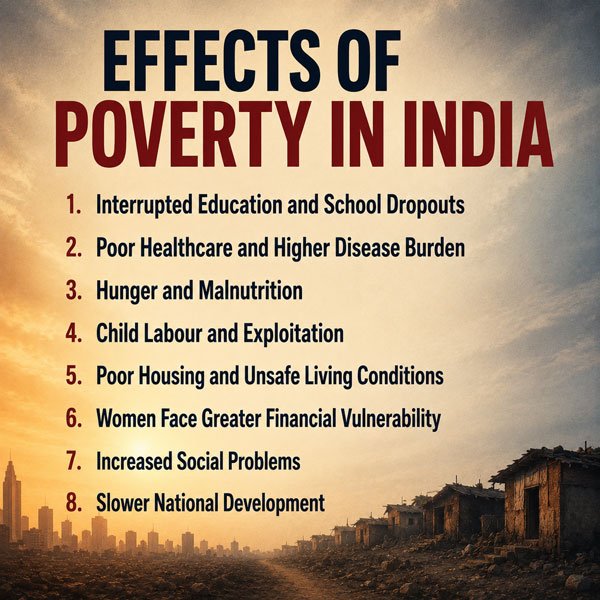
Poverty affects every aspect of life. It goes beyond a lack of income and influences education, health, nutrition, employment, housing, and overall well-being. While India’s economy continues to grow, millions of families still struggle to access opportunities that can improve their quality of life. The consequences of poverty are often passed from one generation to the next, making it difficult for families to escape the cycle without sustained support.
1. Interrupted Education and School Dropouts
Education is one of the strongest tools for breaking the cycle of poverty, yet financial hardship forces many children to leave school before completing their studies. Families with limited income often struggle to pay for school fees, uniforms, books, transportation, and digital learning resources.
When children leave school early, they have fewer employment opportunities in the future, making it more likely that poverty will continue into the next generation. Improving access to quality education remains one of the most effective long-term solutions for reducing poverty.
Through its Future School initiative, Shaksham Foundation works towards creating educational opportunities that empower children with knowledge and skills needed for a better future.
2. Poor Healthcare and Higher Disease Burden
Families living in poverty often delay medical treatment because they cannot afford consultation fees, medicines, diagnostic tests, or hospital care. Minor illnesses can become serious health conditions when treatment is postponed, increasing both medical expenses and health risks.
Poor nutrition, unsafe drinking water, inadequate sanitation, and overcrowded living conditions also increase the spread of infectious diseases, especially among children and elderly individuals.
Providing affordable healthcare services and preventive medical care plays an important role in reducing poverty and improving overall community health.
3. Hunger and Malnutrition
Food insecurity remains one of the most visible consequences of poverty. Many low-income households struggle to consume balanced and nutritious meals on a regular basis. Children suffering from malnutrition are more likely to experience delayed physical growth, weaker immunity, learning difficulties, and poor academic performance.
Adults affected by poor nutrition often experience lower productivity, increased health complications, and reduced earning capacity, making it even more difficult to improve their financial situation.
Community-based food assistance programmes, including Leftover Food Donation, help distribute surplus food to people experiencing hunger while reducing food waste.
4. Child Labour and Exploitation
Financial hardship continues to push thousands of children into labour instead of classrooms. Many begin working at an early age in agriculture, construction, roadside businesses, domestic work, or small manufacturing units to support household income.
Child labour not only affects education but also exposes children to unsafe working conditions, exploitation, and long-term health risks. Protecting children’s right to education remains essential for reducing poverty across future generations.
5. Poor Housing and Unsafe Living Conditions
Many families experiencing poverty live in overcrowded settlements with limited access to clean drinking water, sanitation, drainage systems, electricity, and waste management services. Poor housing conditions increase the risk of disease while affecting children’s education, personal safety, and overall quality of life.
Improving community infrastructure and environmental sustainability contributes significantly to healthier living conditions. Programmes such as Waste Management encourage cleaner neighbourhoods and healthier communities.
6. Women Face Greater Financial Vulnerability
Poverty affects women differently due to unequal access to education, employment opportunities, property ownership, financial services, and skill development. Women from economically weaker households often experience lower wages and limited economic independence.
Investing in women’s education and livelihood opportunities strengthens families while contributing to long-term economic growth. Skill development and entrepreneurship programmes help women achieve greater financial security and self-reliance.
7. Increased Social Problems
Persistent poverty can contribute to higher levels of crime, human trafficking, child marriage, substance abuse, domestic violence, and social exclusion. Communities with limited employment opportunities often face greater economic and social challenges that affect long-term development.
Reducing poverty therefore contributes not only to economic progress but also to safer and healthier communities.
8. Slower National Development
When a significant percentage of the population lacks access to education, healthcare, and productive employment, national economic growth is affected. Lower productivity, reduced consumer spending, poor health outcomes, and limited workforce participation slow overall development.
Investing in human capital creates long-term benefits by improving workforce productivity, reducing healthcare costs, increasing innovation, and strengthening economic resilience.
Breaking the Cycle of Poverty
Poverty is rarely caused by one challenge alone. Financial hardship often combines with poor education, unemployment, inadequate healthcare, hunger, and limited opportunities to create a cycle that becomes increasingly difficult to escape.
Breaking this cycle requires coordinated efforts from governments, businesses, educational institutions, healthcare providers, and non-profit organisations. Long-term investments in education, healthcare, nutrition, livelihood development, women’s empowerment, and community welfare can create lasting change that benefits future generations.
In addition to providing direct support, organisations can encourage businesses to contribute through Corporate Social Responsibility (CSR) initiatives that strengthen communities and improve access to essential services.
The next section explores the major government schemes, practical solutions, and the role of NGOs in reducing poverty across India.
Major Government Schemes at a Glance
| Government Scheme | Primary Objective |
|---|---|
| MGNREGA | Guaranteed rural employment |
| PMAY | Affordable housing for eligible families |
| Ayushman Bharat (PM-JAY) | Health insurance and affordable medical care |
| National Food Security Act | Food security through subsidised food grains |
| PM Jan Dhan Yojana | Financial inclusion and banking access |
The Role of NGOs in Poverty Reduction
Government programmes create large-scale impact, but non-governmental organisations (NGOs) play an equally important role by reaching communities that often remain underserved. NGOs work closely with local populations, understand regional challenges, and provide immediate assistance while promoting long-term development.
Their contribution extends beyond financial aid. Many organisations focus on improving literacy, healthcare, nutrition, women’s empowerment, child welfare, livelihood development, environmental sustainability, and elderly care. These initiatives strengthen communities and create opportunities that help families become self-reliant.
How Shaksham Foundation Is Creating Lasting Change
Through its community development initiatives, Shaksham Foundation works to improve the lives of children, women, elderly citizens, and economically weaker families across Ahmedabad. The organisation believes that sustainable development begins with education, healthcare, dignity, and equal opportunities.
Improving Access to Healthcare
Medical emergencies often place enormous financial pressure on low-income households. Through its Medical Support programme, the foundation assists vulnerable individuals by helping improve access to essential healthcare services.
Supporting Women Towards Financial Independence
Empowering women contributes directly to stronger families and healthier communities. Skill development, awareness programmes, and livelihood opportunities help women become economically independent while improving household stability through the Women Empowerment initiative.
Caring for Children Without Families
Children who lack parental care require more than shelter. They need education, emotional support, healthcare, nutrition, and opportunities for personal growth. Through Orphanage Support, the organisation works towards providing a safe and nurturing environment for children in need.
Supporting Senior Citizens
Many elderly individuals experience financial hardship, loneliness, and limited access to healthcare. The Old Age Support programme promotes dignity, care, and well-being by assisting senior citizens with essential resources and compassionate support.
Practical Solutions to Reduce Poverty in India
- Improve access to quality education for every child.
- Increase skill development and employment opportunities.
- Strengthen affordable healthcare services.
- Promote women’s education and financial independence.
- Support sustainable agriculture and rural livelihoods.
- Improve food security and nutritional programmes.
- Encourage responsible Corporate Social Responsibility (CSR) initiatives.
- Increase awareness of government welfare schemes.
- Strengthen partnerships between governments, NGOs, businesses, and local communities.
Reducing poverty requires continuous investment in people rather than temporary financial assistance alone. Education, healthcare, employment, social protection, and community participation remain the strongest foundations for long-term economic development.
In the final section, we’ll answer the most frequently asked questions about poverty in India, summarise the key takeaways, and explore how every individual can contribute towards building a more equitable society.
Frequently Asked Questions (FAQs)
1. What is poverty in India?
Poverty in India refers to a condition where individuals or families lack sufficient income and access to essential necessities such as nutritious food, healthcare, education, safe housing, sanitation, clean drinking water, and stable employment. Today, poverty is also measured using the Multidimensional Poverty Index (MPI), which considers several indicators that affect a person’s quality of life.
2. What are the main causes of poverty in India?
The major causes of poverty include unemployment, underemployment, lack of quality education, rising healthcare expenses, inflation, agricultural challenges, regional inequality, climate change, population growth, and limited access to economic opportunities.
3. Has poverty decreased in India?
Yes. According to reports published by NITI Aayog and the World Bank, India has made significant progress in reducing multidimensional poverty over the last decade. Millions of people have gained better access to education, sanitation, electricity, healthcare, and financial services. However, many families remain financially vulnerable and continue to face economic uncertainty.
4. How does poverty affect children?
Poverty affects children in several ways, including poor nutrition, interrupted education, child labour, inadequate healthcare, and limited career opportunities. These challenges can have long-term consequences on physical, emotional, and intellectual development.
5. Why is education important for reducing poverty?
Education equips individuals with knowledge, skills, and better employment opportunities. Children who complete their education are more likely to secure stable jobs, improve their income, and break the cycle of poverty for future generations.
6. How does healthcare help reduce poverty?
Affordable healthcare prevents families from falling into debt due to medical emergencies. Access to preventive healthcare, timely treatment, and essential medicines improves overall well-being while reducing financial hardship.
7. What role do NGOs play in reducing poverty?
NGOs complement government efforts by providing education support, healthcare assistance, nutrition programmes, women empowerment initiatives, orphan care, elderly support, disaster relief, and livelihood development. They work directly with communities to deliver sustainable solutions that improve quality of life.
8. How is Shaksham Foundation helping reduce poverty?
Shaksham Foundation supports underprivileged communities through initiatives focused on education, medical assistance, women’s empowerment, orphan care, elderly support, food distribution, environmental sustainability, and community development. These programmes aim to create long-term opportunities that help individuals become self-reliant.
9. How can individuals contribute to poverty reduction?
Individuals can support poverty reduction by donating to credible NGOs, sponsoring children’s education, volunteering, participating in food donation drives, supporting skill development programmes, promoting responsible CSR initiatives, and spreading awareness about community welfare.
10. Why is poverty reduction important for India’s future?
Reducing poverty strengthens the economy, improves public health, increases educational attainment, enhances workforce productivity, and promotes social equality. Sustainable poverty reduction contributes to inclusive economic growth and improves the overall quality of life for future generations.

Related Posts
Comments (0)