
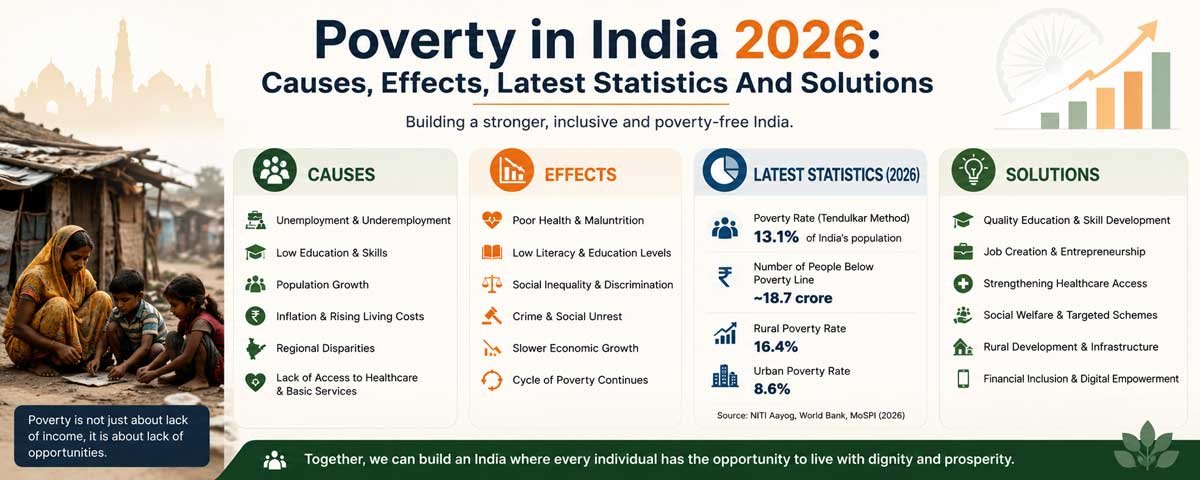
Poverty in India 2026 remains one of the country's most pressing social and economic challenges…
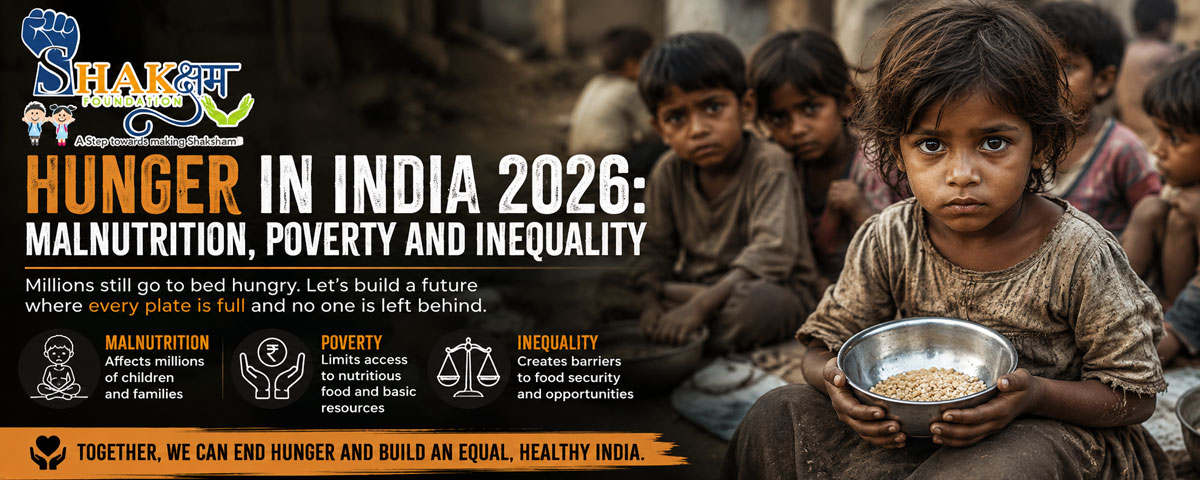
Hunger in India 2026: Malnutrition, Poverty And Inequality
Despite rapid economic growth, hunger in India remains one of the country’s most urgent humanitarian challenges. Millions of families continue to struggle to access nutritious food every day, while children, women, and older adults face the greatest risk of malnutrition. Hunger is no longer only about food shortages—it is closely linked to poverty, unemployment, poor nutrition, and unequal access to essential services. Addressing these challenges requires long-term community support, stronger public awareness, and organisations working at the grassroots level to ensure no one is left behind.
At Shaksham Foundation, we believe that every person deserves access to nutritious food, quality education, healthcare, and a life of dignity. Through food distribution drives, nutrition support, and our Education Support Programme, we work with underserved communities to improve children’s health and create opportunities for a better future. When children receive proper nutrition and education together, they have a much stronger chance of breaking the cycle of poverty.
This guide explores the current state of hunger in India in 2026, the connection between malnutrition, poverty, and inequality, and how individuals, communities, and NGOs can work together to create lasting change.
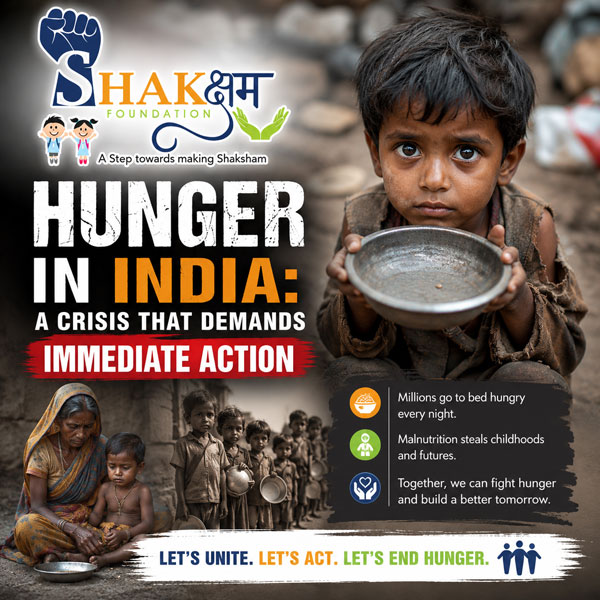
Hunger in India: A Crisis That Demands Immediate Action
Hunger affects millions of people across India every day. Although the country has made significant progress in food production, access to nutritious meals remains unequal. Many families living in rural villages, urban settlements, and economically disadvantaged communities continue to struggle with food insecurity.
According to the Global Hunger Index, India continues to face serious challenges related to hunger and child nutrition. Reports from the World Food Programme and UNICEF India also highlight that millions of children remain at risk of malnutrition because they do not receive balanced and nutritious diets during their early years.
Hunger is not only a health concern. It affects children’s ability to learn, adults’ ability to work, and families’ ability to improve their quality of life. Reducing hunger requires more than food distribution—it also depends on education, healthcare, livelihood opportunities, and stronger community support.
Key Facts About Hunger in India
- More than 224 million people in India are estimated to experience undernourishment, according to the World Food Programme.
- According to the National Family Health Survey (NFHS-5), 35.5% of children under five are stunted, reflecting long-term nutritional deficiencies.
- Nearly 67% of children between 6 and 59 months are affected by anaemia, increasing the risk of poor physical and cognitive development.
- Millions of families continue to experience food insecurity because of poverty, unemployment, rising living costs, and unequal access to nutritious food.
These figures demonstrate that hunger is not simply about having enough food. Access to nutritious meals, healthcare, clean drinking water, education, and social support all play an important role in improving long-term health outcomes.
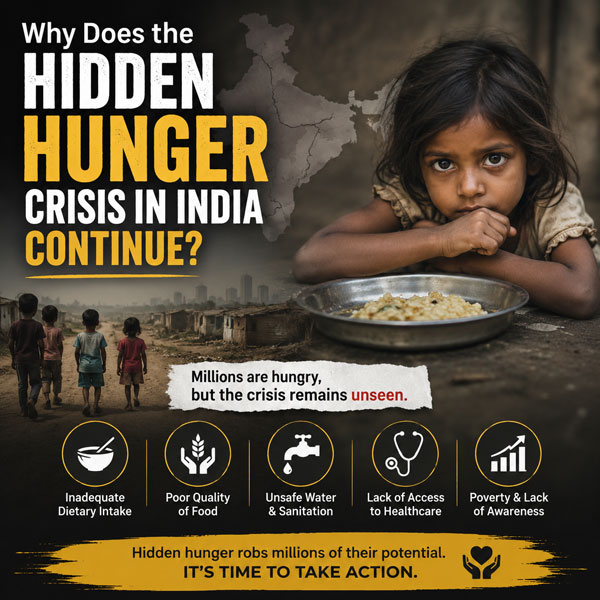
Why Does Hunger Continue to Affect Millions of Indians?
The causes of hunger are complex and interconnected. Several economic and social factors continue to make nutritious food difficult to access for many households.
1. Poverty and Limited Income
Poverty remains one of the leading causes of hunger in India. Families with unstable incomes often struggle to afford balanced meals, forcing them to prioritise quantity over nutritional quality. Rising food prices further increase the pressure on low-income households.
2. Malnutrition Rather Than Food Shortages
Many households consume enough calories but still lack essential nutrients such as iron, protein, vitamins, and minerals. Poor nutrition affects children’s growth, weakens immunity, and increases the risk of illness throughout life.
3. Food Loss and Distribution Challenges
India produces sufficient food to feed its population, yet a considerable amount is lost because of storage issues, transportation gaps, and supply chain inefficiencies. Improving food distribution systems can help ensure that more nutritious food reaches families who need it most.
4. Limited Awareness About Nutrition
Many families are unaware of affordable, balanced diets that support healthy growth. Nutrition education plays an important role in helping parents make informed food choices using locally available ingredients.
How Hunger Affects Children
Children are among the most vulnerable to hunger and malnutrition. Poor nutrition during early childhood can affect physical growth, learning ability, concentration, and overall health. Children who regularly attend school without adequate nutrition often struggle academically because hunger reduces energy levels and affects memory and attention.
Improving nutrition and education together creates better long-term outcomes. Through initiatives such as the Education Support Programme, Shaksham Foundation works to support children’s learning while promoting healthier futures for underserved communities.
Hunger and Child Nutrition in India (2024–2025)
| Indicator | Latest Data | Why It Matters |
|---|---|---|
| Children Stunted (Under 5) | 35.5% | Shows long-term nutritional deficiency affecting growth. |
| Children Wasted (Under 5) | 19.3% | Indicates acute malnutrition requiring timely intervention. |
| Underweight Children | 32.1% | Reflects inadequate nutrition during early childhood. |
| Children with Anaemia | 67.1% | Iron deficiency affects growth, learning, and immunity. |
| Exclusive Breastfeeding | 63.7% | Supports healthy infant development during the first six months. |
| Fully Immunised Children | 76.6% | Improves child health and reduces preventable diseases. |
How Hunger Affects Children
Children are among the most vulnerable to hunger and malnutrition. Poor nutrition during early childhood can affect physical growth, learning ability, concentration, and overall health. Children who regularly attend school without adequate nutrition often struggle academically because hunger reduces energy levels and affects memory and attention.
Improving nutrition and education together creates better long-term outcomes. Through initiatives such as the Education Support Programme, Shaksham Foundation works to support children’s learning while promoting healthier futures for underserved communities.
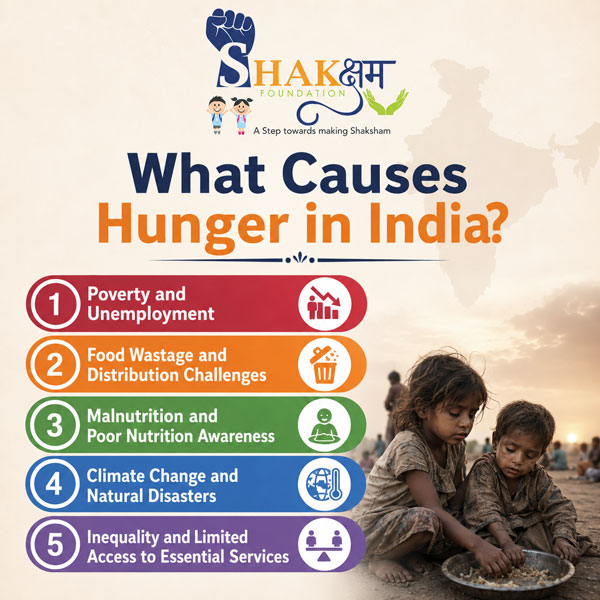
What Causes Hunger in India?
Hunger is not caused by a single problem. It results from several interconnected challenges that prevent millions of people from accessing nutritious food every day. While India produces enough food to feed its population, many families still struggle because of poverty, unemployment, food wastage, and unequal access to government support. Understanding these causes is the first step towards finding lasting solutions.
1. Poverty and Unemployment
Poverty continues to be one of the biggest reasons behind hunger in India. Families with unstable incomes often find it difficult to afford healthy meals throughout the month. Many people work in seasonal or informal jobs where earnings are uncertain, making it challenging to purchase nutritious food regularly.
According to the World Bank, financial insecurity remains a major barrier to improving nutrition and food security. Rising living costs have further increased the burden on low-income households, forcing many families to reduce both the quantity and quality of their meals.
2. Food Wastage and Distribution Challenges
India is one of the world’s largest food producers, yet a significant amount of food is lost before it reaches consumers. Poor storage facilities, transportation delays, and inefficient supply chains contribute to large-scale food wastage every year.
At the same time, many remote villages and underserved communities struggle to receive a steady supply of nutritious food. Improving storage infrastructure, reducing food waste, and strengthening distribution systems can help ensure that surplus food reaches people who need it most.
3. Malnutrition and Poor Nutrition Awareness
Hunger is not always about eating less food. Many families consume enough calories but still suffer from malnutrition because their diets lack essential nutrients such as protein, iron, calcium, vitamins, and minerals.
According to the National Family Health Survey (NFHS-5), childhood malnutrition and anaemia remain major public health concerns across India. Better nutrition awareness, especially for pregnant women and young children, can significantly improve long-term health outcomes.
4. Climate Change and Natural Disasters
Floods, droughts, cyclones, and unpredictable weather patterns continue to affect agricultural production across many states. Crop failures reduce farmers’ incomes while increasing food prices for consumers. Small-scale farmers are often the hardest hit because they depend heavily on seasonal harvests for their livelihoods.
Climate-related challenges have made food security increasingly unpredictable, especially in rural regions where agriculture remains the primary source of income.
5. Inequality and Limited Access to Essential Services
Economic inequality continues to widen the gap between those who have access to nutritious food and those who do not. Families living in remote villages, informal settlements, and economically disadvantaged communities often face additional barriers, including limited healthcare, inadequate sanitation, poor education, and fewer employment opportunities.
These challenges reinforce one another, making it more difficult for vulnerable households to improve their quality of life.
The Link Between Hunger, Malnutrition and Poverty
Hunger, malnutrition, and poverty are closely connected. When families do not have enough income to purchase nutritious food, children are more likely to suffer from poor growth, weaker immunity, and learning difficulties. Poor health can also reduce a person’s ability to work, creating a cycle that is difficult to break.
Access to nutritious food, quality healthcare, and education gives families a better chance to improve their livelihoods. This is why organisations like Shaksham Foundation combine food support with educational initiatives through the Education Support Programme, helping children build healthier and more secure futures.
Common Myths About Food Donation
Food donation is one of the simplest ways to help reduce hunger, yet several misconceptions discourage people from contributing. Understanding the facts can encourage more individuals and organisations to support hunger relief initiatives.
| Myth | Fact |
|---|---|
| Only large donations make a difference. | Every contribution matters. Even a single meal can help someone facing food insecurity. |
| Only cooked food can be donated. | Dry rations, packaged food, grains, pulses, and fresh fruits are also valuable contributions when they meet safety standards. |
| Food donations encourage dependency. | Emergency food support helps families during difficult periods while protecting health and dignity. |
| Donating food is complicated. | Registered organisations such as Shaksham Foundation make the donation process simple and transparent. |
| You need substantial financial resources to help. | People can support hunger relief by donating food, volunteering, organising collection drives, or spreading awareness. |
How Shaksham Foundation Supports Families Facing Hunger
At Shaksham Foundation, we believe that no one should have to choose between food, education, or healthcare. Our programmes are designed to support children, families, and vulnerable communities by addressing immediate needs while encouraging long-term development.
Our work focuses on providing nutritious meals, distributing ration kits, supporting children’s education, organising community outreach programmes, and creating opportunities that help families build a more secure future.
- Food distribution drives for underserved communities.
- Nutrition support for children and vulnerable families.
- Educational assistance through our Education Support Programme.
- Community awareness programmes promoting nutrition and healthy living.
- Volunteer and donation initiatives that help extend support to more families.
By combining hunger relief with education and community support, we aim to create meaningful change that improves lives for years to come.
Why Fighting Hunger Requires More Than Food Distribution
Providing meals to people facing hunger is essential, but it is only one part of the solution. Lasting progress depends on improving nutrition, expanding education, creating employment opportunities, strengthening healthcare, and increasing awareness about healthy eating. When these efforts work together, families are better equipped to overcome the challenges that contribute to hunger in India.
Many organisations now focus on long-term community development alongside emergency food relief. This approach helps families become more self-reliant while improving children’s health, education, and overall well-being.
How Shaksham Foundation Is Addressing Hunger in India
At Shaksham Foundation, we believe that every individual deserves access to nutritious food and the opportunity to live with dignity. Our initiatives focus on supporting vulnerable families while creating long-term solutions that improve health, education, and quality of life.
By combining hunger relief with our Education Support Programme, we help children receive both proper nutrition and access to learning. A child who is healthy is more likely to attend school regularly, perform better academically, and build a brighter future.
Food Distribution Drives
Regular food distribution programmes help families experiencing financial hardship meet their immediate nutritional needs. We work with volunteers and donors to distribute freshly prepared meals, dry ration kits, and essential groceries to communities that need them most.
- Freshly prepared meals
- Dry ration kits for families
- Emergency food assistance during difficult situations
- Community food distribution campaigns
Supporting Children’s Nutrition
Children require balanced nutrition for healthy physical and mental development. Our programmes focus on helping children receive nutritious meals that support healthy growth, improve concentration in school, and strengthen overall well-being.
Good nutrition during childhood also reduces the risk of long-term health complications and supports better learning outcomes.
Education and Nutrition Go Hand in Hand
Hunger and education are closely connected. Children who attend school without adequate nutrition often struggle to concentrate, participate in classroom activities, and perform well academically.
Through our Education Support Programme, Shaksham Foundation helps children continue their education while promoting healthier futures through community-based initiatives.
Community Awareness Programmes
Awareness plays an important role in reducing malnutrition. Our outreach activities encourage families to understand the importance of balanced diets, child nutrition, hygiene, and healthy food choices using locally available ingredients.
Sharing practical nutrition knowledge empowers families to make healthier decisions within their available resources.
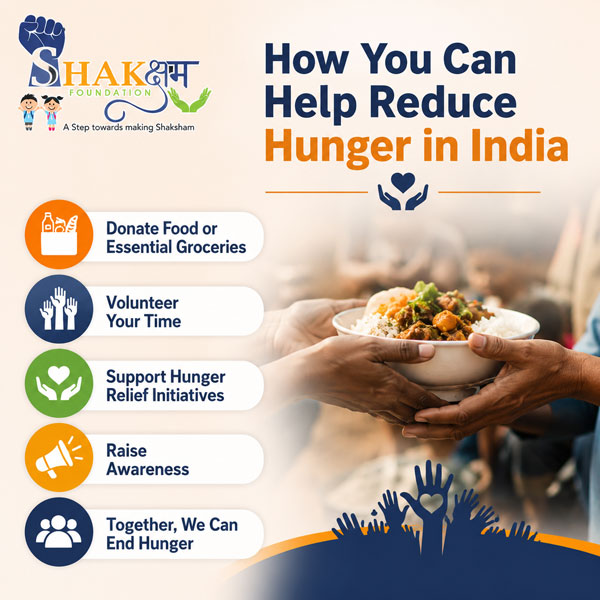
How You Can Help Reduce Hunger in India
Ending hunger requires support from individuals, businesses, educational institutions, and local communities. Every contribution, regardless of its size, helps improve someone’s life.
Donate Food or Essential Groceries
Donating fresh food, dry rations, grains, pulses, cooking oil, and other essential groceries helps families experiencing food insecurity meet their daily nutritional needs.
Volunteer Your Time
Volunteers play an important role in organising food drives, distributing meals, raising awareness, and supporting community programmes. Even a few hours of your time can make a meaningful difference.
Support Hunger Relief Initiatives
Financial contributions allow organisations to expand food distribution programmes, purchase essential supplies, improve logistics, and reach more communities across India.
Raise Awareness
Sharing reliable information about hunger, malnutrition, and food insecurity encourages more people to take action. Greater awareness also helps reduce misconceptions surrounding food donation and community support.
The Long-Term Impact of Reducing Hunger
When families have regular access to nutritious food, children are healthier, school attendance improves, healthcare costs decrease, and communities become more resilient. Addressing hunger also contributes to stronger local economies by improving productivity and creating better opportunities for future generations.
According to the Food and Agriculture Organization of the United Nations (FAO), reducing hunger is closely linked to achieving sustainable development, improving public health, and strengthening food security worldwide.
By supporting organisations like Shaksham Foundation, individuals and businesses can contribute to meaningful initiatives that improve nutrition, strengthen education, and create lasting change for underserved communities.
Hunger Relief at a Glance
| Area of Support | Positive Impact |
|---|---|
| Food Distribution | Provides immediate relief to families experiencing food insecurity. |
| Nutrition Support | Improves children’s health and supports healthy development. |
| Education Support | Encourages regular school attendance and better learning outcomes. |
| Community Awareness | Promotes healthier food choices and better nutrition practices. |
| Volunteer Programmes | Strengthens community participation and expands outreach efforts. |
| Donor Support | Helps extend food relief and community development initiatives. |
Conclusion
India continues to face a complex hunger crisis in 2026, shaped by deep-rooted poverty, unequal access to resources, and persistent malnutrition across vulnerable populations. While economic growth has improved living standards for many, it has not fully translated into food security for all.
The gap between urban prosperity and rural deprivation remains a central challenge. Children, women, and marginalized communities continue to bear the highest burden of hidden hunger and undernutrition. Addressing this issue requires more than short-term relief measures; it demands structural reforms in food distribution, healthcare access, education, and rural development.
Sustainable progress will depend on coordinated action between government bodies, NGOs, and civil society, along with stronger accountability in welfare implementation. Hunger in India is no longer only about food availability—it is about nutrition, dignity, and equal opportunity.
Frequently Asked Questions (FAQs)
1. What is the main cause of hunger in India?
The primary causes include poverty, unemployment, unequal food distribution, and lack of access to nutritious food in rural and underserved regions.
2. What is hidden hunger?
Hidden hunger refers to vitamin and mineral deficiencies even when people consume enough calories, often due to poor diet quality.
3. Which groups are most affected by hunger in India?
Children, pregnant women, rural households, daily wage workers, and marginalized communities are the most affected.
4. Is hunger in India improving in 2026?
Improvements exist in some regions, but national disparities continue, especially in rural and economically weaker areas.
5. How does poverty contribute to hunger?
Poverty limits access to food, healthcare, and nutrition, forcing families to rely on low-cost, low-nutrition diets.
6. What role does malnutrition play in India’s hunger crisis?
Malnutrition weakens immunity, increases child mortality risk, and reduces productivity, creating a long-term cycle of poverty.
7. How does child hunger affect India’s future?
Child hunger leads to stunted growth, poor education outcomes, and reduced workforce productivity in the long term.
8. What government programs address hunger in India?
Programs like the Public Distribution System (PDS), Mid-Day Meal Scheme, and POSHAN Abhiyaan aim to reduce hunger and malnutrition.
9. Can NGOs help reduce hunger in India?
Yes, NGOs play a key role by providing food relief, nutrition programs, awareness campaigns, and rural outreach support.
10. What is the biggest challenge in eliminating hunger in India?
The biggest challenge is not food production, but ensuring equitable access, reducing leakage in distribution systems, and improving nutrition quality.
References (Authoritative Sources)
- Food and Agriculture Organization (FAO)
- World Health Organization (WHO)
- UNICEF India
- World Bank Data
- Ministry of Health & Family Welfare, Government of India

Related Posts
Comments (0)