
Education can change the direction of a girl's life. It gives her knowledge, builds confidence,…
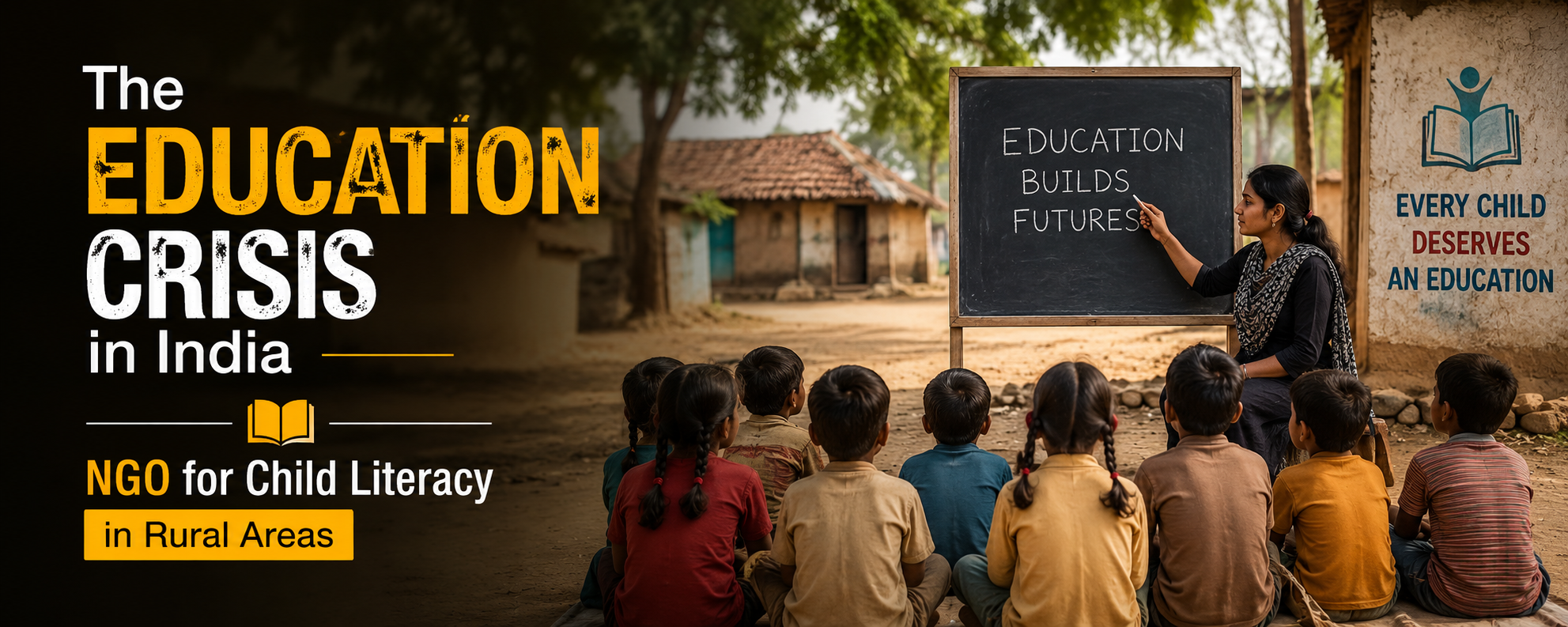
The Education Crisis in India | NGO for Child Literacy in Rural Areas
Education is one of the strongest foundations for a better future, yet millions of children across India still struggle to receive even basic schooling. For many families living in rural villages, education remains difficult because of poverty, poor school infrastructure, teacher shortages, and limited learning resources. While literacy rates have improved over the years, the gap between urban and rural education continues to affect children’s opportunities. This is why the work of every NGO for child literacy in rural areas has become more important than ever.
At Shaksham Foundation, we believe that every child deserves the opportunity to learn, regardless of where they are born. Through community learning programmes, educational support initiatives, learning materials, and volunteer-driven activities, we are helping children stay in school and build brighter futures. Our Education Support Programme focuses on improving literacy, reducing school dropouts, and making quality education more accessible in underserved communities.
This guide explores the education crisis in India, the challenges children face in rural areas, and how NGOs are helping bridge the learning gap. You’ll also discover how community support, better educational resources, and collective action can create lasting change for future generations.
Understanding the Education Crisis in India
India has made remarkable progress in expanding access to education over the past two decades. However, access alone does not guarantee quality learning. Many children, particularly those living in rural and economically weaker communities, continue to face challenges that prevent them from completing their education or achieving basic literacy skills.
According to the Ministry of Education, India’s literacy rate has improved significantly. Even so, the difference between urban and rural education remains considerable. Schools in many villages continue to struggle with inadequate classrooms, insufficient teaching staff, limited digital resources, and poor infrastructure.
Recent reports from ASER Centre also show that many students in higher grades still face difficulty reading simple text and solving basic arithmetic problems. These learning gaps often begin in primary school and continue throughout a child’s education if timely support is not provided.
Why Rural Education Deserves Immediate Attention
Education does much more than teach reading and writing. It opens doors to employment, improves health awareness, strengthens decision-making, and helps families escape the cycle of poverty. When children receive a quality education, the benefits extend to their families and entire communities.
For rural India, improving education is essential for long-term development. Better schools create better opportunities, reduce child labour, encourage higher incomes, and prepare young people with practical skills for the future. Studies published by UNESCO Institute for Statistics continue to highlight the strong connection between literacy, economic growth, and social development.
Although rural literacy has improved over the last decade, many villages still lack the educational support needed to help children reach their full potential. This is where organisations such as Shaksham Foundation play a meaningful role by providing educational programmes that strengthen learning outside the traditional classroom.
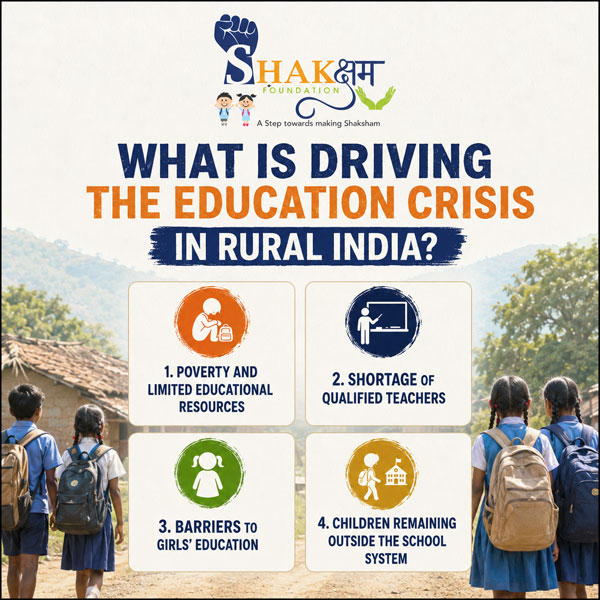
What Is Driving the Education Crisis in Rural India?
The education gap in rural India is not caused by a single issue. It is the result of several long-standing challenges that continue to affect children’s learning every day.
1. Poverty and Limited Educational Resources
For many families, meeting daily household expenses comes before education. Children may leave school to support family income, while others attend schools that lack classrooms, libraries, electricity, clean drinking water, or functional toilets. These conditions make regular learning difficult and often reduce school attendance.
2. Shortage of Qualified Teachers
Many government schools continue to operate with vacant teaching positions or limited subject specialists. A shortage of trained educators affects classroom learning, individual attention, and student performance. Without experienced teachers and proper teaching materials, children often struggle to build strong reading and mathematical skills during their early school years.
3. Barriers to Girls’ Education
Many girls discontinue their education because of financial pressure, household responsibilities, safety concerns, or inadequate sanitation facilities at schools. Improving school infrastructure and providing educational support can help more girls continue their studies and complete their education successfully.
4. Children Remaining Outside the School System
Children from migrant families, remote tribal communities, and economically disadvantaged households are among those most likely to miss regular schooling. Without timely intervention from schools, communities, and organisations working in education, these children face a much greater risk of remaining outside the formal education system
Key Literacy Statistics in India (2024–2025)
| Category | Literacy Rate | Key Insight |
|---|---|---|
| National Literacy Rate | 80.9% | Overall literacy continues to improve across the country. |
| Urban Literacy | 88.9% | Urban regions benefit from stronger educational infrastructure. |
| Rural Literacy | 77.5% | Rural communities continue to face significant learning challenges. |
| Male Literacy | 87.2% | Male literacy remains higher than female literacy. |
| Female Literacy | 74.6% | Many girls still face obstacles that interrupt their education. |
| Rural Female Literacy | 70.4% | Girls in rural communities require greater educational support. |
| School Dropout Rate (6–17 years) | Approximately 12.6% | Economic conditions remain one of the leading reasons for leaving school. |
| Out-of-School Children | More than 3.1 million | Many children still lack access to consistent education. |
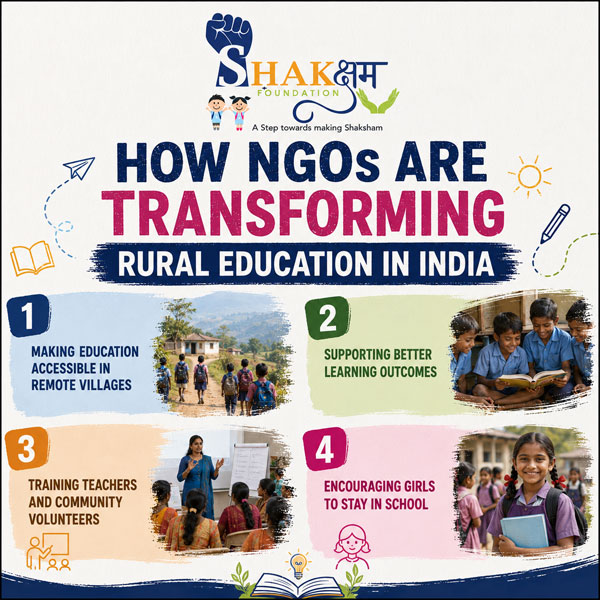
How NGOs Are Transforming Rural Education in India
Government programmes have expanded access to education across India, but many rural communities still need additional support to ensure children receive quality learning opportunities. This is where an NGO for child literacy in rural areas plays an important role. By working closely with local communities, schools, teachers, and parents, NGOs help children continue their education and develop essential learning skills.
Many organisations focus on improving literacy, reducing dropout rates, supporting teachers, and creating safe learning environments. Their efforts complement government initiatives and ensure that children in remote villages receive the educational support they deserve.
1. Making Education Accessible in Remote Villages
Many villages are located far from well-equipped schools, making daily education difficult for children. NGOs help bridge this gap by establishing community learning centres, after-school programmes, mobile classrooms, and village libraries. These initiatives allow children to continue learning even when regular school resources are limited.
Several organisations also distribute books, notebooks, school bags, uniforms, and other learning materials to children from economically weaker families, helping reduce financial barriers to education.
2. Supporting Better Learning Outcomes
Enrolling children in school is only the beginning. The real goal is helping them understand what they study. Many NGOs organise remedial classes that strengthen reading, writing, mathematics, and language skills for children who have fallen behind their grade level.
According to the ASER Centre, improving foundational literacy during the early years has a significant impact on long-term academic performance. Regular assessments and personalised learning support help children build confidence while improving classroom performance.
3. Training Teachers and Community Volunteers
Teachers remain one of the most important factors in a child’s education. Many NGOs conduct teacher training programmes that introduce practical classroom strategies, activity-based learning, and student engagement techniques. Community volunteers also receive training so they can support children outside school hours.
By strengthening teaching quality, NGOs help create classrooms where children are encouraged to ask questions, participate actively, and develop a stronger interest in learning.
4. Encouraging Girls to Stay in School
Many girls discontinue their education because of financial challenges, household responsibilities, or inadequate school facilities. NGOs work with parents and local communities to encourage girls’ education while providing scholarships, educational materials, mentoring programmes, and hygiene support that help improve school attendance.
Keeping girls in school not only benefits individual families but also contributes to stronger communities and long-term economic growth.
How Shaksham Foundation Supports Child Literacy in Rural Areas
At Shaksham Foundation, education is one of the most important ways to create lasting change. Our programmes focus on helping children overcome learning barriers while giving them the resources they need to build a brighter future.
Through our Education Support Programme, we work alongside local communities to improve literacy, strengthen foundational learning, and encourage children to remain in school.
After-School Learning Support
Many children require additional academic support beyond regular school hours. Our learning centres provide extra guidance in reading, writing, mathematics, and basic problem-solving, helping students strengthen their understanding of classroom subjects.
- Personalised learning support
- Reading and writing improvement activities
- Mathematics practice sessions
- Small-group learning with trained mentors
Learning Resources for Children
Access to basic educational materials can make a significant difference in a child’s learning journey. Shaksham Foundation helps children by providing essential learning resources that encourage regular attendance and improve classroom participation.
- School bags and stationery
- Books and learning materials
- Educational activity kits
- Learning support for children from underserved communities
Digital Learning Opportunities
Technology has become an important part of modern education, yet many rural students still have limited access to digital learning. Our education programmes introduce children to digital learning resources that help them build computer awareness and strengthen their understanding of core subjects.
These initiatives help prepare students for future educational opportunities while reducing the digital learning gap between rural and urban communities.
Community Participation in Education
Education becomes more effective when families and communities work together. Shaksham Foundation regularly engages with parents, teachers, and community leaders to encourage school attendance, improve awareness about education, and support children’s learning at home.
Building strong community involvement creates a positive environment where children receive encouragement both inside and outside the classroom.
Why Supporting Child Literacy Creates Long-Term Change
Every child who learns to read confidently gains opportunities that extend far beyond the classroom. Education improves employment prospects, strengthens financial independence, promotes better health awareness, and helps future generations achieve greater stability.
Supporting an NGO for child literacy in rural areas is one of the most effective ways to contribute to lasting social development. Even small contributions can help provide books, educational resources, learning centres, and academic support for children who need it most.
If you would like to learn more about our mission or support educational initiatives, visit the Shaksham Foundation or explore our Education Support Programme to see how lives are changing through education.
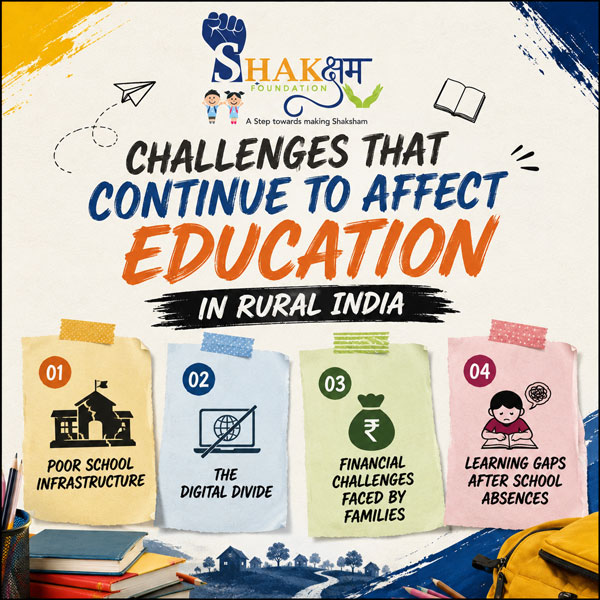
Challenges That Continue to Affect Education in Rural India
Although literacy rates have steadily improved, millions of children still face obstacles that prevent them from receiving a quality education. These challenges are often interconnected, making it difficult for students to stay in school and achieve their full potential. Addressing these issues requires continuous efforts from governments, communities, schools, and every NGO for child literacy in rural areas.
Poor School Infrastructure
Many rural schools continue to operate with limited facilities. Some classrooms lack proper furniture, clean drinking water, functional toilets, electricity, libraries, or science laboratories. In several villages, children travel long distances every day simply to attend school. These conditions affect attendance, learning outcomes, and overall student motivation.
According to the UDISE+ Portal, improving school infrastructure remains one of the key priorities for strengthening India’s education system.
The Digital Divide
Technology has changed how students learn, but access to digital education is still uneven across rural India. Many families cannot afford smartphones, laptops, or reliable internet connections. As a result, children often miss opportunities to develop digital skills that have become increasingly important in modern education.
Providing digital learning resources alongside classroom education helps students gain confidence and prepares them for future academic and career opportunities.
Financial Challenges Faced by Families
For many households, education competes with daily financial needs. Children may miss school to support family income or help with household responsibilities. Even expenses such as uniforms, books, transportation, and stationery can become barriers for economically weaker families.
Scholarships, educational assistance, and community support programmes help reduce these financial pressures and encourage children to continue their education.
Learning Gaps After School Absences
Children who miss school for extended periods often struggle to catch up with their classmates. Without additional academic support, these learning gaps become wider each year, increasing the likelihood of dropping out before completing school.
Remedial education programmes, community learning centres, and volunteer-led tutoring can help students regain confidence and improve their academic performance.
Why Early Literacy Shapes a Child’s Future
Strong reading and writing skills developed during the early years form the foundation for future learning. Children who build literacy skills in primary school are more likely to perform well in higher grades, complete their education, and pursue better career opportunities.
Research published by the UNESCO Institute for Statistics highlights that improving foundational literacy contributes to better employment opportunities, healthier communities, and stronger economic development.
When children struggle to read during their early school years, they often face difficulties in every subject that follows. This is why early intervention remains one of the most effective ways to improve educational outcomes.
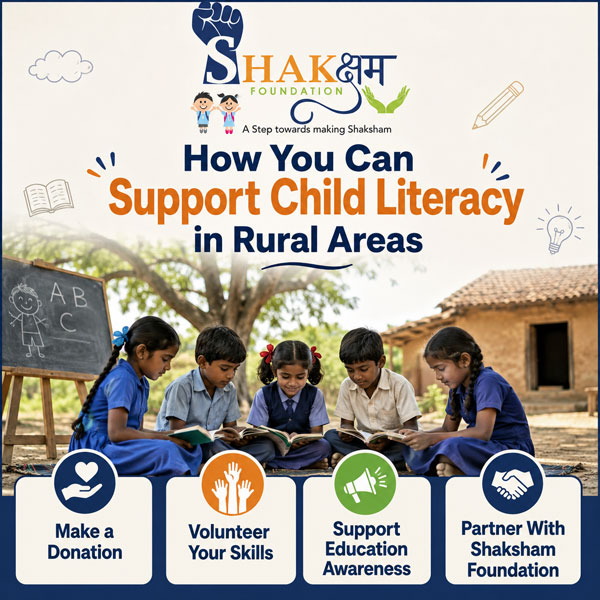
How You Can Support Child Literacy in Rural Areas
Improving education is a shared responsibility. While governments continue expanding educational programmes, individuals, businesses, volunteers, and charitable organisations all have an important role in helping children succeed.
Supporting an organisation like Shaksham Foundation helps provide learning resources, educational support, and opportunities for children who need them the most.
Make a Donation
Financial contributions help provide books, stationery, educational materials, classroom resources, and learning support for children studying in underserved communities.
Volunteer Your Skills
Teachers, college students, working professionals, and community members can contribute their knowledge by mentoring students, conducting workshops, or assisting with educational activities.
Support Education Awareness
Raising awareness about the importance of education encourages more families to enrol their children in school and continue their studies. Sharing reliable information also helps communities understand the long-term value of literacy.
Partner With Shaksham Foundation
Corporate organisations, educational institutions, and community groups can work with Shaksham Foundation to strengthen educational initiatives across rural communities. Together, we can expand learning opportunities and help more children build brighter futures.
Learn more about our Education Support initiatives and discover how your contribution can make a meaningful difference.
Education in India: Key Facts at a Glance
| Area | Current Situation |
|---|---|
| National Literacy Rate | 80.9% (Age 7 years and above) |
| Rural Literacy Rate | 77.5%, lower than urban regions |
| Female Literacy Rate | 74.6%, with rural communities facing greater challenges |
| Major Barriers | Poverty, infrastructure gaps, teacher shortages, and limited digital access |
| How NGOs Help | Learning centres, educational resources, teacher support, and literacy programmes |
| How You Can Help | Donate, volunteer, spread awareness, or support education programmes |
Building a Brighter Future Through Education
Every child deserves the opportunity to learn, grow, and build a better future. Reducing the education crisis in India requires consistent effort from schools, communities, policymakers, and organisations working at the grassroots level. When children receive quality education, they gain the confidence and skills needed to improve their lives and contribute to society.
As an NGO for child literacy in rural areas, Shaksham Foundation remains committed to supporting children through education, learning resources, and community-based programmes. Every contribution—whether through volunteering, donations, or spreading awareness—helps create more opportunities for children across rural India.
Conclusion
The education crisis in India is about more than access to schools. It is about ensuring every child receives the knowledge, skills, and opportunities needed to build a better future. Although literacy rates have improved over the years, many children in rural communities continue to face challenges such as poverty, limited school infrastructure, teacher shortages, and a lack of learning resources.
Creating lasting change requires a collective effort. Government initiatives, local communities, schools, volunteers, and every NGO for child literacy in rural areas have an important role in helping children stay in school and achieve their full potential.
At Shaksham Foundation, we remain committed to improving education through community-based learning programmes, educational support, and literacy initiatives. Our Education Support Programme is helping children build stronger foundations for lifelong learning.
Whether you choose to donate, volunteer, or simply spread awareness, every contribution helps create more opportunities for children who deserve a brighter future. Together, we can help reduce the education gap and ensure that every child has the chance to learn, grow, and succeed.
Frequently Asked Questions (FAQs)
1. What is the education crisis in India?
The education crisis in India refers to the challenges that prevent millions of children from receiving quality education. These include poverty, teacher shortages, poor school infrastructure, limited learning resources, and unequal access to education in rural areas.
2. Why is rural education important in India?
Rural education helps children develop essential literacy and life skills while improving employment opportunities and reducing poverty. Educated communities also contribute to stronger economic and social development.
3. How does an NGO for child literacy in rural areas help children?
An NGO for child literacy in rural areas supports children by providing learning materials, remedial education, after-school programmes, teacher training, scholarships, and community-based learning initiatives that improve literacy and school attendance.
4. What are the biggest challenges facing rural schools?
Common challenges include inadequate classrooms, limited teaching staff, poor sanitation facilities, lack of electricity, insufficient learning materials, and restricted access to digital education.
5. Why do children drop out of school in rural India?
Children may leave school because of financial difficulties, family responsibilities, long travel distances, poor school facilities, or limited educational support at home.
6. How does Shaksham Foundation support children’s education?
Shaksham Foundation supports children’s education through community learning programmes, educational resources, literacy initiatives, volunteer support, and its dedicated Education Support Programme.
7. Why is early literacy important for children?
Early literacy helps children develop reading, writing, communication, and problem-solving skills. Strong foundational learning also improves academic performance throughout a child’s education.
8. How can I contribute to improving child literacy in rural India?
You can support child literacy by donating to trusted organisations, volunteering your time, sponsoring educational programmes, or spreading awareness about the importance of education.
9. What role do parents play in improving education?
Parents encourage regular school attendance, create positive learning habits at home, and motivate children to continue their education. Their involvement significantly improves learning outcomes.
10. How can businesses support education in rural India?
Businesses can strengthen education by supporting CSR initiatives, funding learning centres, providing educational materials, sponsoring scholarships, or partnering with organisations working to improve child literacy.
References
- ASER Centre – Annual Status of Education Report (ASER).
- UNESCO Institute for Statistics – Global literacy and education statistics.
- Ministry of Education, Government of India – National education policies and official reports.
- UDISE+ – School education data and infrastructure statistics.
- Pratham Education Foundation – Educational programmes and learning initiatives.
- Azim Premji Foundation – Research and educational development programmes.
- UNICEF India – Child education and development resources.
- NITI Aayog – Education and development policy reports.

Related Posts

Comments (0)